


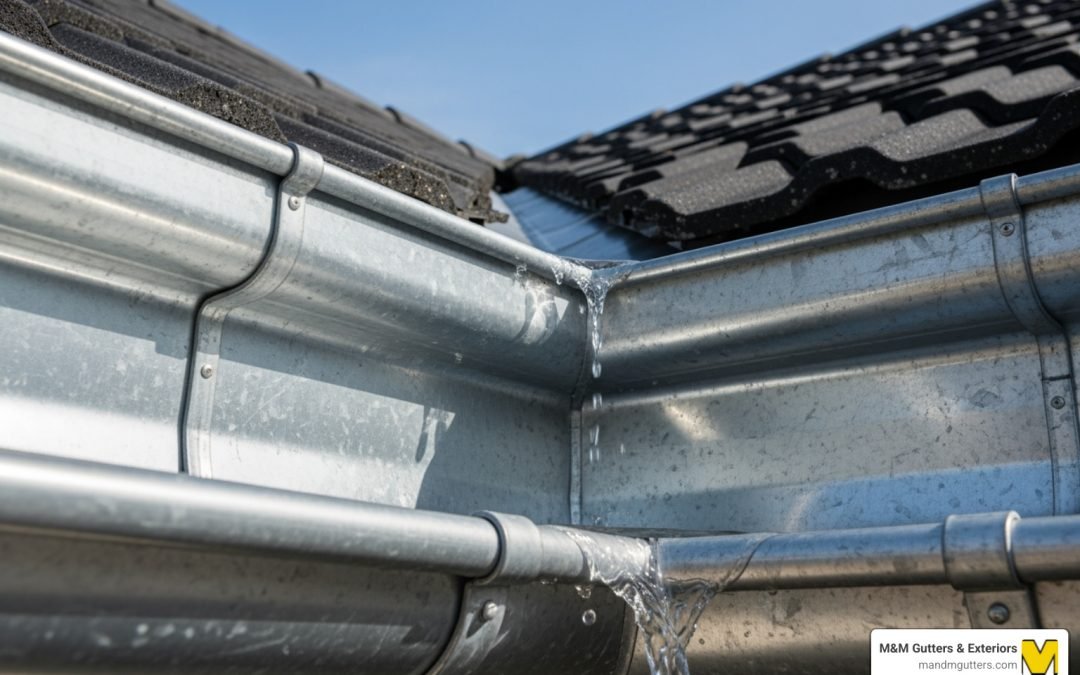
Why Galvanised Steel Is Taking Over Rainwater Management
Galvanised rainwater goods are steel gutters, downpipes, and drainage components coated with a protective zinc layer that resists rust and corrosion for decades. Here’s what makes them stand out:
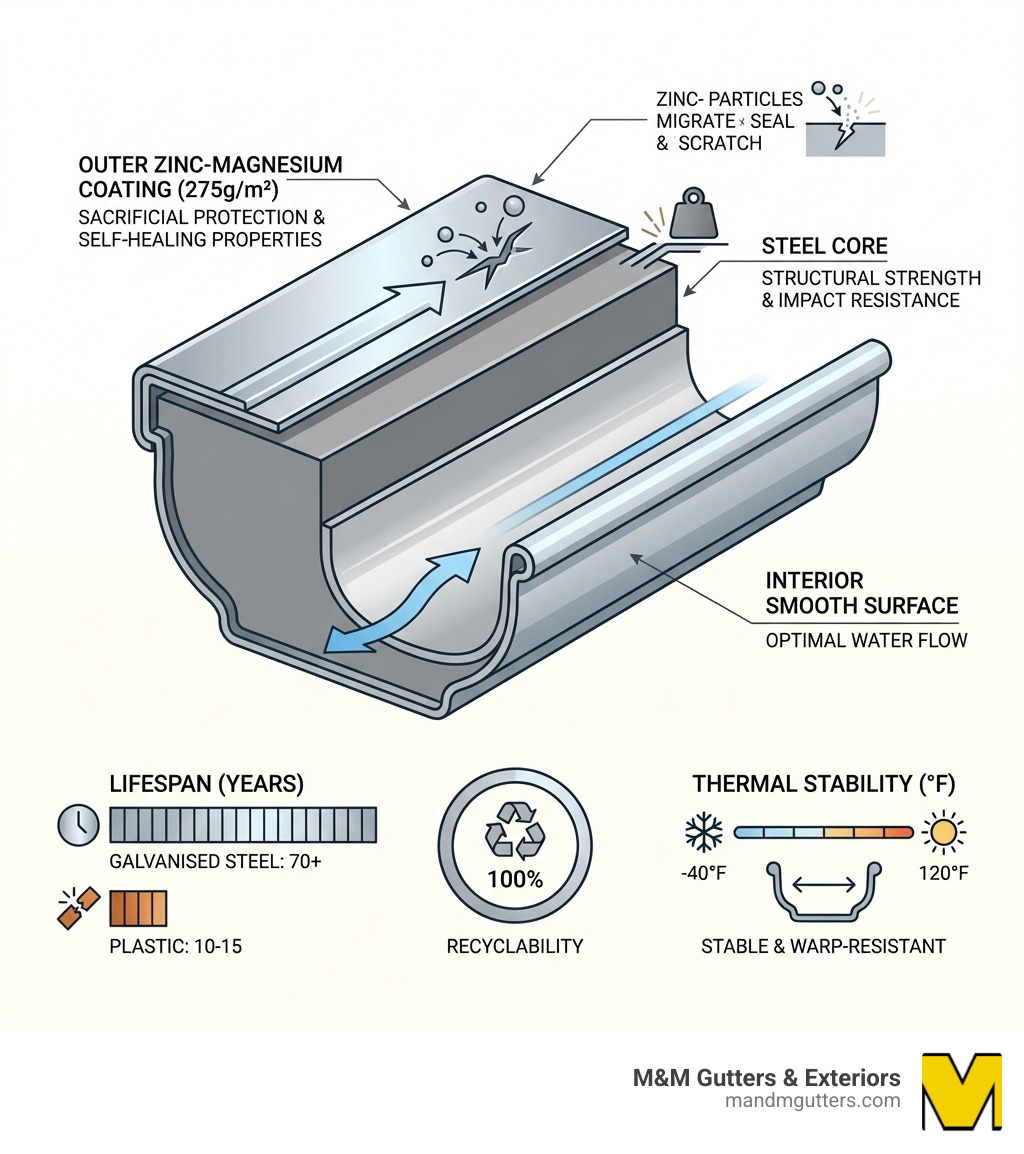
- Lifespan: 70+ years in ideal conditions, 25+ years even in harsh urban environments
- Material: Steel core with 275g/m² zinc coating for sacrificial protection
- Recyclability: 100% recyclable, often made from 30% recycled content
- Durability: Won’t crack, warp, or split like plastic alternatives
- Warranty: Typically 15-20 years manufacturer guarantee
- Cost: Higher upfront ($650 vs $210 for PVC on average homes) but lower lifetime cost
If you’ve walked past gutters flaking paint or sagging under snow loads here in Utah, you know the frustration. Most homeowners pick plastic because it’s cheap and easy. But here’s the truth—galvanised steel gutters outlast plastic by decades, handle our heavy snowfall without warping, and won’t dump micro-plastics into your garden soil.
The science is simple: a zinc coating forms a metallurgical bond with steel underneath. When scratches happen, the zinc actually heals itself by corroding first, protecting the steel core. That’s why European builders have trusted galvanised systems for generations, even as American homes defaulted to vinyl.
In Salt Lake City, where we swing from scorching summers to sub-zero winters, thermal stability matters. Plastic expands and contracts, creating weak joints that leak. Galvanised steel? It barely budges. And when you factor in the cost of replacing plastic gutters every 10-15 years—including scaffolding, labor, and disposal—metal becomes the economical choice.
I’m Nathan Nuttall, and over my 30+ years at M&M Gutters & Exteriors, I’ve seen how the right galvanised rainwater goods transform Utah homes from constant maintenance headaches into worry-free systems. Let’s walk through exactly why these steel workhorses might be your best investment.
Galvanised rainwater goods vocabulary:
What Are Galvanised Rainwater Goods and How Are They Made?
When we talk about galvanised rainwater goods, we aren’t just talking about shiny metal troughs. We’re talking about a highly engineered drainage system designed to withstand the elements. These goods include everything from the gutters themselves to downpipes, hoppers, brackets, and end caps.
The manufacturing process starts with high-quality sheet steel. This steel is incredibly strong but, on its own, would rust the moment it touched a Utah rainstorm. To prevent this, the steel undergoes a galvanisation process. In the most common “hot-dip” method, the steel is submerged in a bath of molten zinc. This isn’t just a surface paint job; the zinc and steel form a metallurgical bond, essentially becoming one material.
For high-end systems like the ones we recommend, the steel is coated with roughly 275g of zinc per square meter. This density is crucial. It ensures that the “sacrificial protection” lasts for decades rather than years. Whether you are looking at a sleek contemporary build in Salt Lake County or a heritage barn in Summit County, these materials provide a foundation that plastic simply cannot match. For a deeper look at how these stack up against other options, check out our Rain Gutter Materials Guide.
The Science of the Galvanising Process
The real “magic” of galvanised rainwater goods lies in the chemistry. Modern systems often use a zinc-magnesium alloy coating. Adding magnesium to the mix enhances the corrosion resistance even further, making the material tougher against the salt air (a factor even here near the Great Salt Lake) and urban pollutants.
The standout feature of this process is “self-healing.” If a branch scrapes your gutter or a tool nicks the surface during installation, you might expect rust to start blooming. However, with galvanised steel, zinc ions are mobile. They migrate to the exposed area, sealing the scratch and continuing to protect the underlying steel. This is why these systems can last well beyond 70 years in rural areas.
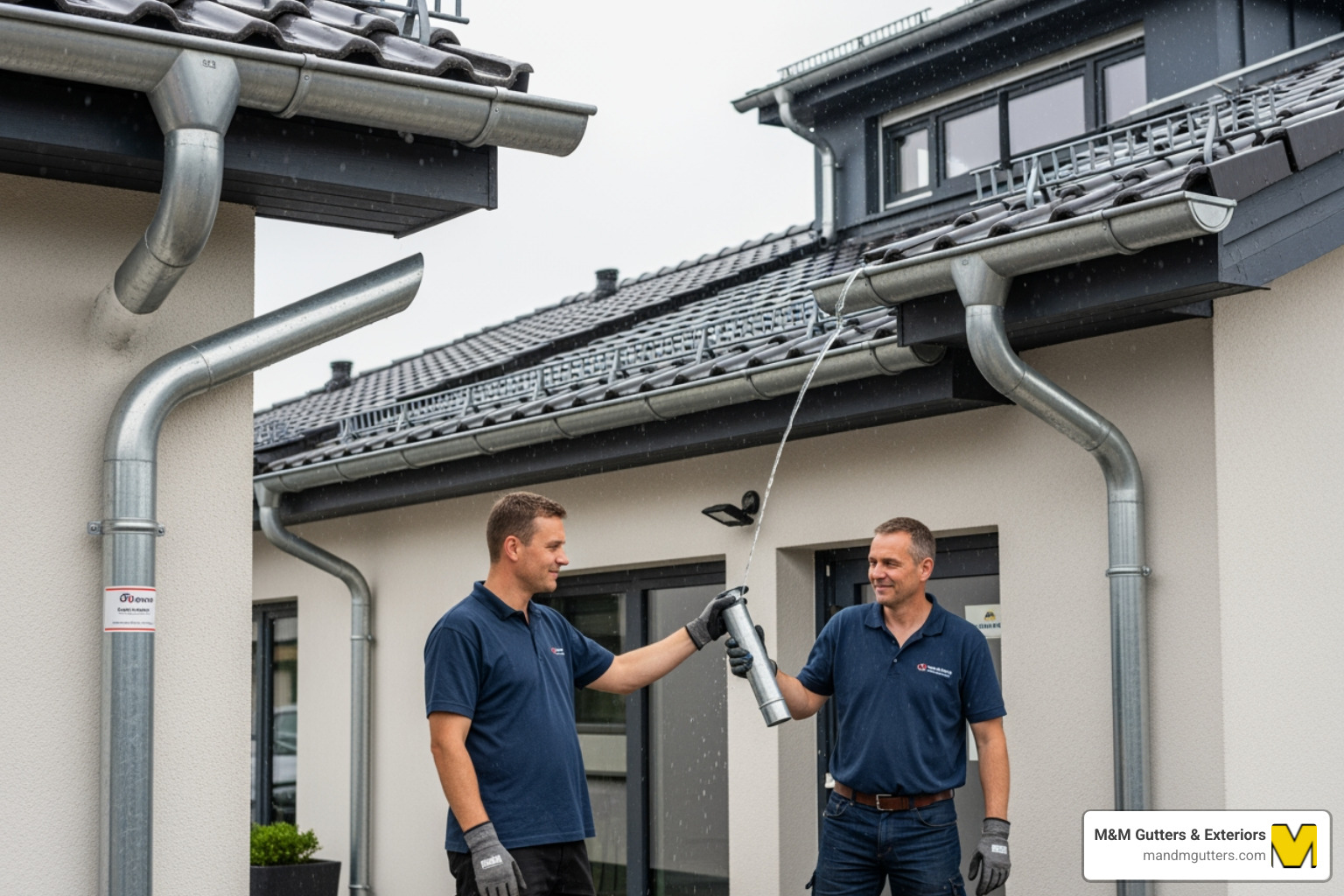
Modern systems have also moved away from the “messy sealant” days of the past. Many premium galvanised systems now feature push-fit and click-lock components. You can Watch the smart system installation video to see how these parts snap together for a perfect, leak-proof fit.
Structural Integrity of Galvanised Rainwater Goods
Structural integrity is where steel really flexes its muscles. In Northern Utah, our gutters face two major enemies: heavy snow loads and extreme temperature swings.
- Impact Resistance: If a ladder leans against a plastic gutter, it might crack. If a heavy icicle falls into it, it could shatter. Galvanised steel has high impact resistance, meaning it can take a beating from hail and snow without failing.
- Thermal Stability: Plastic (uPVC) has a high thermal expansion rate. It grows in the sun and shrinks in the cold. This constant “sawing” motion eventually wears out seals and causes leaks. Steel has minimal thermal movement. It stays put, which is vital for maintaining the “pitch” or slope of your gutters.
- High-Flow Capacity: Because steel is so strong, manufacturers can create “deeper-flow” profiles. These gutters can handle a much higher volume of water than standard plastic versions, which is a lifesaver during those sudden Salt Lake City summer downpours.
Understanding these structural benefits helps answer the question: Why Are Rain Gutters Important? They aren’t just for show; they protect your home’s foundation from thousands of gallons of water.
Key Advantages of Galvanised Steel Over Other Materials
Choosing the right material is a balance of aesthetics, budget, and performance. While we work with many materials, galvanised rainwater goods often sit in the “Goldilocks” zone—stronger than plastic, more affordable than cast iron, and more durable than standard aluminium.
| Feature | Galvanised Steel | uPVC (Plastic) | Aluminium |
|---|---|---|---|
| Lifespan | 25 – 70+ Years | 10 – 15 Years | 25 – 40 Years |
| Strength | Very High | Low (Brittle) | Moderate |
| Thermal Movement | Minimal | High | Moderate |
| Eco-Friendly | 100% Recyclable | Non-Recyclable | Recyclable |
| Aesthetics | Modern/Industrial | Functional/Basic | Sleek/Modern |
| Resistance | Self-healing Zinc | Prone to Cracking | Corrosion Resistant |
As you can see, steel offers a superior strength-to-weight ratio. It provides the “heft” needed for Utah winters without the impossible weight of traditional cast iron. If you’re torn between more common options, our guide on Vinyl vs. Aluminum Gutters: Which One Is Best? provides more context on the standard American market.
Longevity and Performance in Harsh Climates
In rural parts of Northern Utah, where the air is clean, galvanised steel can easily last over 50 to 70 years. In more urban locations like downtown Salt Lake City, where there are more pollutants in the air, you can still expect 20-25 years of service before you even need to think about repainting.
The real test, however, is the snow. A standard “house lot” of plastic gutters can hold a certain amount of weight before the brackets fail or the plastic warps. Steel doesn’t warp. When we install these systems in places like Park City or Summit County, we know they can handle the heavy “Sierra Cement” snow that slides off our roofs. For more on durability, see How Long Do Rain Gutters Last?
Sustainability and Environmental Impact
We are increasingly finding that our clients in Davis and Weber counties are concerned about their environmental footprint. Galvanised rainwater goods are a champion of the “green” building movement for several reasons:
- Recycled Content: Many steel gutter systems are manufactured from up to 30% recycled material.
- 100% Recyclable: At the end of its very long life, every bit of a steel gutter system can be melted down and turned into something else—perhaps even a new car!
- No Micro-plastics: Unlike plastic gutters, which shed micro-particles into the soil as they degrade in the UV light, steel remains inert.
- Longevity: The most sustainable product is the one you only have to buy once. By avoiding the 15-year replacement cycle of plastic, you save on manufacturing energy and landfill waste.
You can even View eco-friendly finish options that use high-build polyester coatings which are designed to perform for 25 years without needing a refresh.
Maintenance and Painting Your Galvanised Steel Gutters
One of the best things about galvanised rainwater goods is that they are relatively low-maintenance. However, “low” doesn’t mean “no.” To get that 70-year lifespan, you need to treat them right.
Basic maintenance involves keeping them clear of debris. Clogged gutters hold moisture against the metal, which can eventually wear down the zinc coating. We recommend a professional cleaning at least twice a year. You can follow our How to Clean Gutters: The Complete DIY Guide to keep things flowing.
Preparing New vs. Old Galvanised Metal
If you decide to paint your gutters to match a specific trim color, preparation is everything. You can’t just slap paint on galvanised steel and expect it to stick.
- New Galvanised Metal: New steel often has a thin layer of “machine oil” from the factory. If you paint over this, the paint will peel within a year. The pro trick? A vinegar wash. A simple solution of half vinegar and half water will remove the oil and slightly “etch” the surface for better adhesion.
- Old Galvanised Metal: If you are refurbishing old gutters that are already peeling, you need to scrape off the old paint and sand the surface to provide “tooth” for the new layer.
- The Right Products: Always use a dedicated primer like Galvite (or a similar high-quality metal primer) followed by two coats of top-line exterior latex paint. Avoid “home center” bargain paints; for metal, you want the good stuff from a dedicated paint store.
Proper cleaning isn’t just about aesthetics; it’s about the health of the system. Learn more about The Importance of Cleaning Your Rain Gutters.
Preventing Corrosion and White Rust
While galvanised steel is rust-resistant, it isn’t invincible. There is a specific phenomenon called “white rust” (zinc oxidation) that can occur before the gutters are even on your house.
White rust happens when new, uninstalled galvanised parts are stored in wet, cramped conditions—like being wrapped in plastic on a damp job site. If moisture gets trapped between the stacked pieces without airflow, the zinc reacts and forms a white, powdery deposit. To prevent this, always store your galvanised rainwater goods in a dry, well-ventilated area until installation.
Another thing to watch out for is acidic wood runoff. If you have a cedar shake roof or unpainted wooden shingles, the tannins and acids in the wood can accelerate the corrosion of the zinc layer. In these cases, we often recommend a colour-coated steel system which provides an extra layer of polymer protection. You can Download the technical price and spec list to see the various protective coatings available.
Installation and Cost Considerations for Galvanised Rainwater Goods
Installing steel is a different beast than installing plastic. While plastic is often a DIY weekend project, steel requires a bit more precision. However, modern “smart” systems have made it much easier for professionals to provide a perfect fit.
Most modern galvanised systems use dry-jointed connectors. This means no messy silicones or sealants that will eventually dry out and crack. The joints use EPDM rubber seals and click-lock mechanisms that provide a watertight fit while allowing for the tiny amount of thermal movement the steel does experience.
If you are considering a new system, it is always best to look at Rain Gutters Installation services to ensure the pitch and brackets are handled correctly.
Choosing the Right Profile for Galvanised Rainwater Goods
Aesthetics play a huge role in your choice. Galvanised steel is incredibly versatile:
- Half-Round: This is the classic European look. It’s sleek, elegant, and excellent for water flow because there are no corners for debris to get stuck in.
- Box Gutters: Perfect for modern, industrial-style homes or commercial buildings in Salt Lake City. They offer a clean, angular look and massive water capacity.
- Colour-Coated: If you don’t want the “natural” silver look, you can get galvanised steel in a variety of colors—Anthracite Grey, Black, and Copper Metallic are currently very popular in Utah. These come with robust warranties (often 15 years for the coating itself).
Not sure which one fits your home? Read Which Kind of Rain Gutter Is Best For You? to see how different styles impact your curb appeal.
Long-Term Value vs. Initial Investment
Let’s talk numbers. There is no denying that galvanised rainwater goods cost more upfront. For a standard home, the material cost for an Infinity Galvanised Steel system might be around $650, whereas a basic PVC system might only be $210.
However, the “cheap” option is often the most expensive over time.
- Replacement Frequency: You might replace plastic 3 or 4 times in the lifespan of one steel system.
- Labor and Scaffolding: Every time you replace your gutters, you pay for labor and often scaffolding. By choosing steel, you pay that “entry fee” once.
- Property Value: High-quality metal gutters are a selling point. They signal to potential buyers that the home was built or maintained with premium materials.
When you ask, Are Rain Gutters Necessary?, the answer is a resounding yes—but the type of gutter determines if they are a headache or a “set it and forget it” solution.
Frequently Asked Questions about Galvanised Rainwater Goods
How much do galvanised gutters cost compared to plastic?
As mentioned, the initial material cost is typically 2 to 3 times higher than plastic. However, when you factor in the 15-year warranty of steel compared to the 10-year (often pro-rated) warranty of plastic, and the fact that steel lasts 50+ years, the “cost per year” for steel is significantly lower.
Can you paint galvanised gutters immediately after installation?
You can, but you must perform a vinegar wash first to remove factory oils. Alternatively, many homeowners wait 6-12 months for the weather to naturally “etch” the metal, which makes paint adhesion much easier. If you want color immediately, we recommend buying pre-painted, colour-coated galvanised steel.
Are galvanised gutters prone to rusting at the joints?
In the old days of soldering and welding, joints were a weak point. Modern systems use rubber-lined connectors that don’t damage the zinc coating. As long as the “self-healing” zinc layer is intact and you aren’t letting wet leaves sit in the joints for years, rust is rarely an issue at the connections.
Conclusion
At M&M Gutters & Exteriors, we believe your home deserves protection that lasts as long as the foundation it stands on. With over 30 years of experience serving Salt Lake City and the surrounding Northern Utah counties, we’ve seen every gutter failure imaginable. Most of those failures come down to materials that simply weren’t built for our climate.
Galvanised rainwater goods represent the pinnacle of durability, sustainability, and style. Whether you are looking for the “natural” look of a magnesium-zinc finish that settles into a beautiful matte grey or a high-performance color-coated system, steel is the “toughest kid on the block” for a reason.
Ready to see how galvanised steel would look on your home? We offer 3D visualization using HOVER, so you can see the finished product before we even turn a screw. Schedule your professional rain gutter installation with us today and give your home the protection it deserves.