


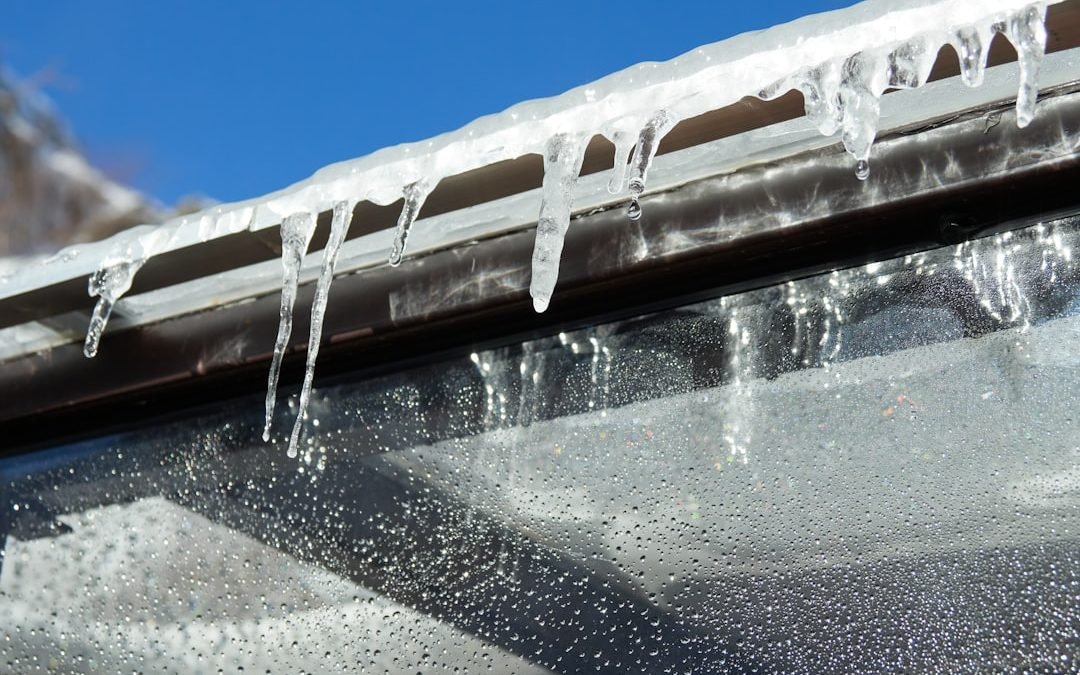
Why Gutter Ice Prevention Matters Before Winter Hits
Gutter ice prevention is something every Utah homeowner should act on before temperatures drop. Here’s a quick overview of the most effective methods:
- Improve attic insulation to at least R-49 (R-60 for colder zones) to stop heat loss that melts roof snow unevenly
- Seal air leaks in your attic to reduce the heat reaching your roof
- Clean gutters every fall to remove debris that traps water and accelerates freezing
- Install self-regulating heat cables in gutters and downspouts to keep water flowing
- Add gutter guards to reduce debris buildup and maintain drainage through winter
- Use a roof rake after heavy snowfall to reduce the snow load on your roof
Ice dams are not just an eyesore. They can cause thousands of dollars in damage — water infiltration alone can cost $15,000 or more to repair, and that’s before factoring in mold, structural fixes, or replacing ruined insulation.
Utah’s Wasatch Front winters make this especially urgent. Temperatures swing up and down constantly, creating the exact freeze-thaw cycle that builds ice dams fast.
I’m Nathan Nuttall from M&M Gutters & Exteriors, and with over 30 years serving Utah homeowners, gutter ice prevention is one of the most common — and most preventable — problems we help people solve. Keep reading for everything you need to protect your home this winter.
Understanding Ice Dams and How They Form
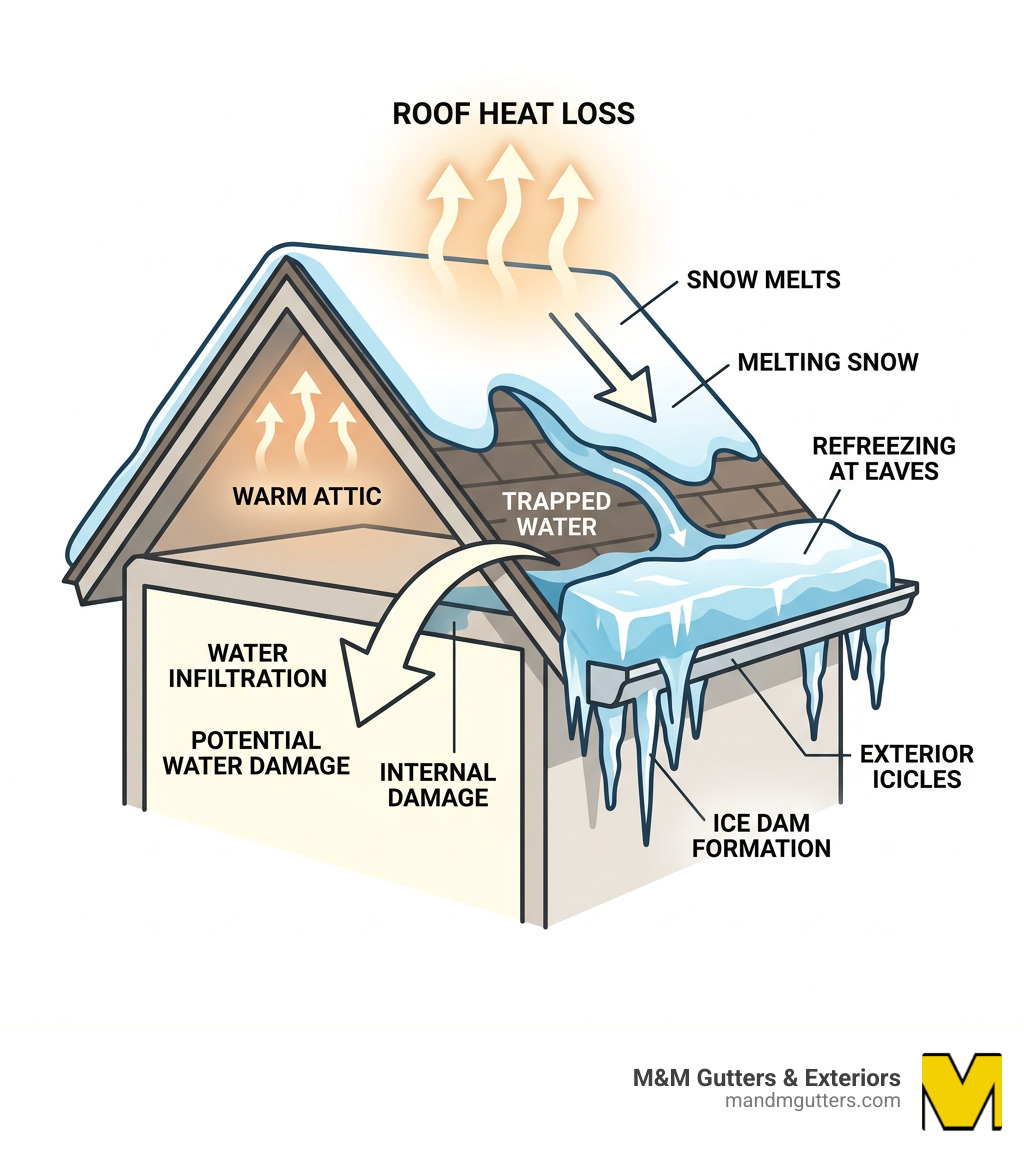
To master Gutter ice prevention, we first have to understand the enemy. An ice dam is a ridge of ice that forms at the edge of a roof. While it might look like a simple collection of icicles, it actually acts as a literal dam, preventing melting snow (water) from draining off the roof.
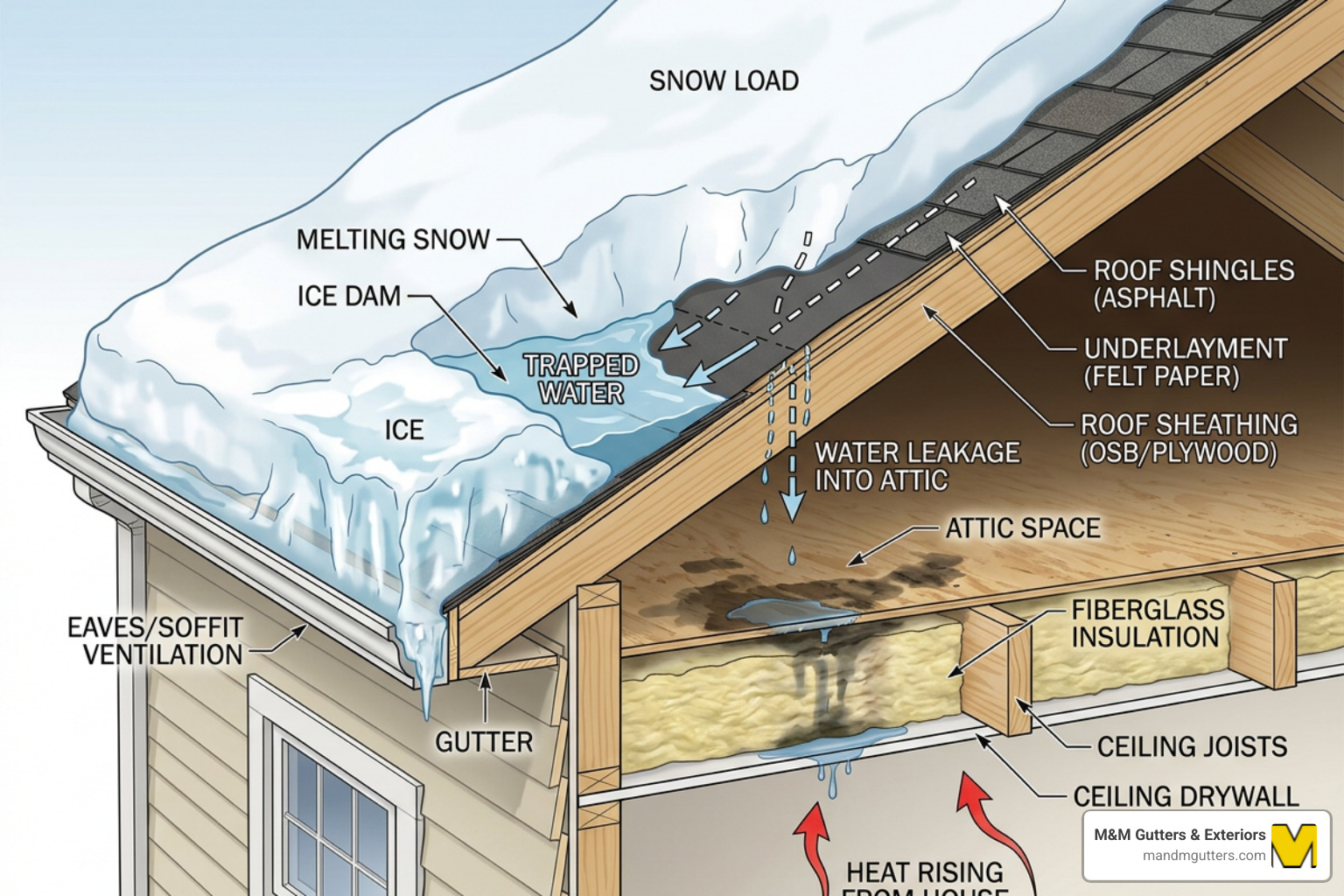
The physics behind this are fascinating—and frustrating for homeowners. According to research on dealing with and preventing ice dams, three ingredients are required: snow on the roof, outside temperatures below freezing, and a roof surface temperature that is uneven (above 32°F at the top and below 32°F at the eaves).
Here is the step-by-step breakdown of how your roof becomes an ice factory:
- Heat Loss: Heat from your home escapes into the attic.
- Snow Melt: This heat warms the upper part of the roof, melting the bottom layer of snow.
- Runoff: The meltwater flows down the roof underneath the snow pack.
- Refreezing: When the water reaches the eaves (which are not warmed by the attic), it hits freezing temperatures and turns back into ice.
- The Backup: As this cycle repeats, the ice ridge grows. Eventually, water pools behind the dam. Since it has nowhere to go, it finds its way under your shingles and into your home.
This heat transfer happens through three methods: conduction (heat moving through solid materials like ceiling joists), convection (warm air rising through gaps and cracks), and radiation (heat waves moving through the attic space). Knowing how to prevent ice dams starts with controlling these three types of heat movement.
The Role of Attic Insulation in Gutter ice prevention
If you want a long-term solution for Gutter ice prevention, you have to look at your attic. The goal is to keep the roof surface at a uniform temperature—ideally the same temperature as the outside air.
In Utah, especially in areas like Summit County or Salt Lake County, standard insulation often isn’t enough. Experts recommend an R-value of at least R-49, and for our colder mountain zones, R-60 is the gold standard. High R-value insulation acts as a thermal blanket, keeping the heat in your living space and out of your attic.
However, insulation is only half the battle. You also need:
- Air Sealing: Sealing gaps around recessed lights, chimneys, and plumbing stacks to stop “bypass” air from warming the attic.
- Ventilation: A combination of soffit vents (at the eaves) and ridge vents (at the peak) creates a “cold roof.” This allows cool air to enter at the bottom and flush out any residual heat at the top.
- Thermal Imaging: At M&M Gutters & Exteriors, we often use thermal imaging to find “hot spots” on a roof where heat is leaking, helping us pinpoint exactly where your Gutter ice prevention strategy is failing.
Many homeowners ask, are heating roof cables a necessary addition to your Utah home? In many cases, especially with complex rooflines or older homes where perfect insulation isn’t possible, they are a vital secondary line of defense.
Why Gutter Ice Prevention is Critical for Your Home
Ignoring ice buildup is a gamble with very high stakes. The weight of ice alone is enough to tear gutters right off the fascia board. A single gallon of water weighs about 8.3 pounds; imagine the stress on your home when hundreds of gallons of ice are hanging from your eaves!
Beyond the physical weight, the “back-up” effect of ice dams leads to catastrophic interior damage. When water gets under shingles, it soaks your insulation (ruining its R-value) and eventually rots your wall studs and ceiling drywall.
| Potential Issue | Estimated Repair Cost |
|---|---|
| Interior Ceiling/Wall Repair | $2,000 – $7,500 |
| Mold Remediation | $10,000+ |
| New Gutter System | $800 – $2,000 |
| Roof Replacement/Repair | $1,500 – $5,000+ |
| Total Major Water Damage | $15,000 – $20,000+ |
When you consider that a professional Gutter ice prevention system costs a fraction of these repairs, the ROI is clear. There’s also the human cost to consider. More than 500,000 people are treated for ladder-related injuries each year in the U.S. Trying to chip away ice yourself is dangerous. Investing in an ice melting system isn’t just about protecting your shingles; it’s about protecting your safety.
Advanced Gutter ice prevention with Heating Systems
When insulation and ventilation aren’t enough—which is common in the heavy snow loads of Northern Utah—we turn to active heating solutions. These systems ensure that even if snow melts, it has a clear, liquid path to the ground.
There are two main types of cables:
- Constant Wattage: These are the “old school” cables. They stay at one temperature regardless of how cold it is outside. They are cheaper upfront but can be up to 70% less efficient than modern versions.
- Self-Regulating Cables: These are the “smart” choice. These cables actually adjust their heat output based on the ambient temperature. When it’s colder, they work harder; when it warms up, they throttle back. This makes them significantly more energy-efficient and safer, as they won’t overheat.
If you’re wondering how does an ice melting system work, it’s all about creating “melt paths.” We typically install the cables in a sine wave pattern (a zigzag) along the roof edge, then run the cable through the gutter and down into the downspout. This ensures the water stays liquid from the roof all the way to the drainage exit.
For a more permanent and aesthetically pleasing look, we also offer heated gutter panels. These are aluminum frames that house the heat cable, protecting it from the elements and distributing the heat more evenly across the gutter surface. Some systems even combine this with micro-mesh guards to keep debris out year-round.
Seasonal Maintenance for Gutter ice prevention
Even the best heating system can’t overcome a gutter filled with wet leaves. Debris acts like a sponge, holding water that would otherwise drain away. When that “sponge” freezes, it creates a solid block of ice that heating cables have to work twice as hard to melt.
Optimal Gutter ice prevention requires a seasonal schedule:
- Late Autumn: This is the best time to install an ice melting system or perform maintenance. Clean out all leaves, sticks, and “roof grit.”
- Downspout Check: Ensure the “elbows” of your downspouts are clear. Ice often starts at these bends because water pools there.
- Winter Inspections: After a big Salt Lake City snowstorm, take a look at your eaves. If you see icicles forming behind the gutter, it’s a sign that water is leaking through the fascia and you need professional help.
Frequently Asked Questions about Gutter Ice
How can I safely remove existing ice dams?
If you already have a massive ridge of ice, do not go out there with a hammer and chisel. You are more likely to put a hole in your roof than you are to fix the problem.
- Steam Removal: This is the safest professional method. High-pressure steam melts the ice without damaging the shingles.
- Calcium Chloride: You can fill a nylon stocking with calcium chloride (not rock salt!) and lay it vertically across the dam. It will melt a “channel” through the ice to let trapped water drain.
- Roof Rakes: Use these from the ground to pull fresh snow off the first 3-6 feet of your roof. This removes the “fuel” for the ice dam.
Before you start any project, check out these steps and considerations for installing roof heat tape.
When should I call a professional for ice removal?
You should call us at M&M Gutters & Exteriors if you notice:
- Water stains on your interior ceilings or walls.
- Gutters that are visibly sagging or pulling away from the house.
- Ice that has completely encased your downspouts.
- Water dripping from the soffit vents.
Deciding between roof heat cable installation DIY vs hiring a pro usually comes down to safety and electrical complexity. Professional systems are often hard-wired and integrated into your home’s electrical panel for maximum reliability.
Are there DIY solutions for preventing gutter freezing?
Yes, but they come with caveats. You can buy plug-in heat tape kits at most hardware stores. While these can work for minor issues, they are often constant-wattage and can be a fire hazard if they overlap or are installed incorrectly.
The most effective DIY “maintenance” is simply keeping your gutters spotless and using a roof rake after every heavy snow. However, for a long-term fix that addresses the root cause, you need to understand what is an ice melting system and how it integrates with your specific roof’s architecture.
Conclusion
Gutter ice prevention isn’t just a chore—it’s an investment in your home’s longevity. From upgrading your attic insulation to installing smart, self-regulating heat cables, taking action now can save you tens of thousands of dollars in water damage and structural repairs later.
At M&M Gutters & Exteriors, we’ve spent over 30 years helping homeowners across Salt Lake City, Summit County, and the entire Wasatch Front navigate our unique Utah winters. We don’t just guess where the problems are; we use advanced tools like HOVER 3D visualization to plan the perfect protection for your home.
Don’t wait for the first leak to appear. Protect your Utah home with professional ice melting systems today and enjoy the peace of mind that comes with a “cold roof” and clear gutters all winter long.