

Architectural Shingles vs Metal Roof: Which Is Right for Your Home?
Architectural shingles vs metal roof is one of the most common roofing decisions homeowners face — and the right answer depends on your budget, how long you plan to stay in your home, and your local climate.
Here’s a quick comparison to help you decide:
| Factor | Architectural Shingles | Metal Roof |
|---|---|---|
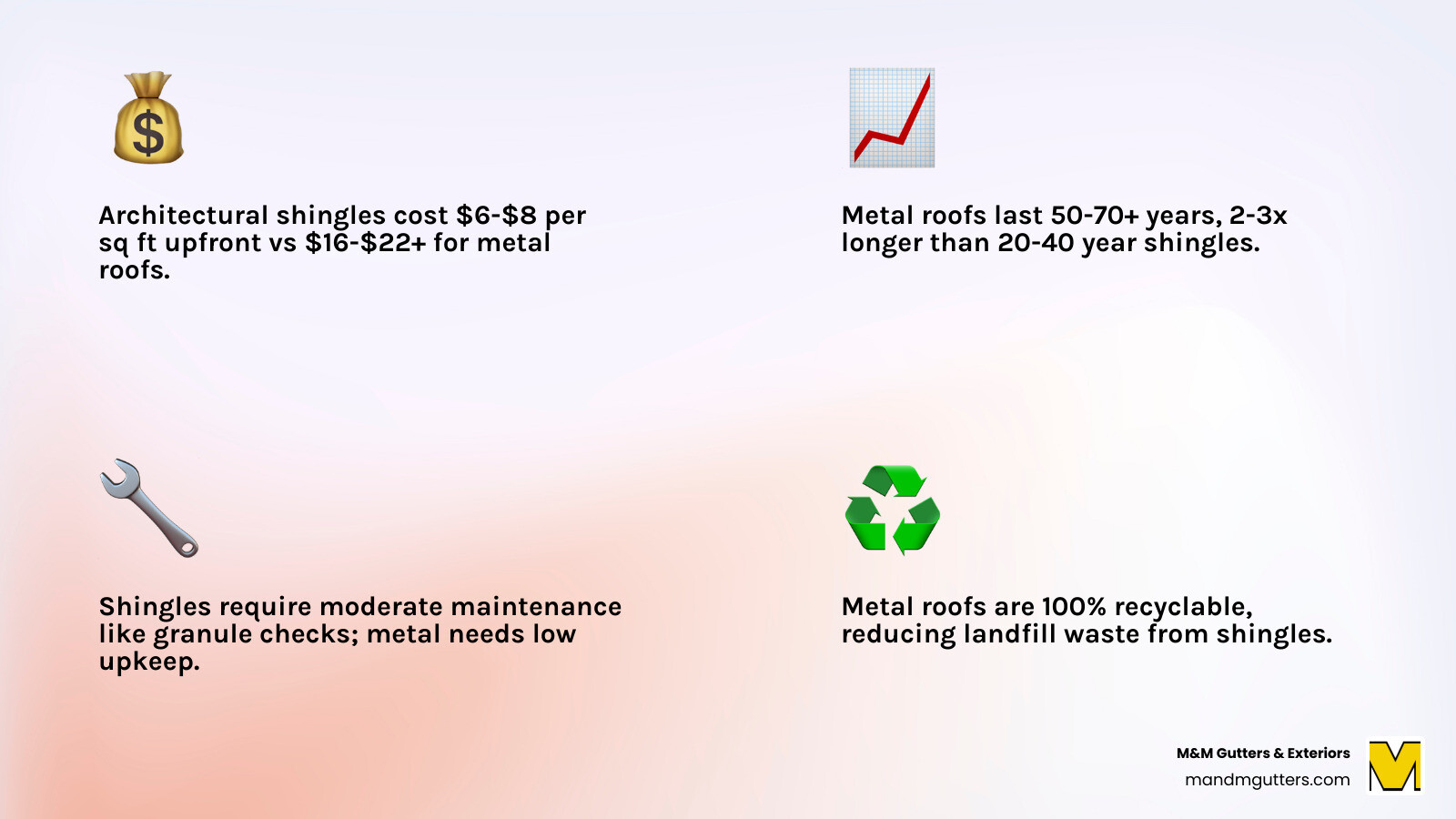
| Upfront Cost | $6-$8 per sq ft | $16-$22+ per sq ft |
| Lifespan | 20-40 years | 50-70+ years |
| 60-Year Total Cost | ~$26,211 (3 replacements) | ~$17,457 (1 roof) |
| Maintenance | Moderate | Low |
| Energy Efficiency | Moderate | High (10-25% cooling savings) |
| Resale Value | 57% cost recouped | 48% cost recouped |
| Installation | Easier, more contractors | Requires specialists |
| Eco-Friendly | Low (landfill waste) | High (100% recyclable) |
The short answer: Architectural shingles cost less upfront and are easier to install. Metal roofs cost more initially but last longer and save money over time — especially if you plan to stay in your home for 15+ years.
Choosing the wrong roof is an expensive mistake. Replacing an asphalt shingle roof every 20-30 years adds up fast. One home inspector noted that many homeowners regret choosing asphalt shingles after just 15 years — when replacement costs hit sooner than expected.
I’m Nathan Nuttall from M&M Gutters & Exteriors, and with over 30 years serving Utah homeowners, I’ve helped hundreds of families navigate the architectural shingles vs metal roof decision firsthand. In this guide, I’ll walk you through everything you need to make the right call for your home and budget.
Understanding the Basics: Architectural Shingles vs Metal Roof
When we sit down with homeowners in Salt Lake City or Davis County, the first thing we do is clear up some terminology. A roof isn’t just a “cover”; it’s a complex system designed to protect your biggest investment.
Defining Architectural Shingles and Their Advantages
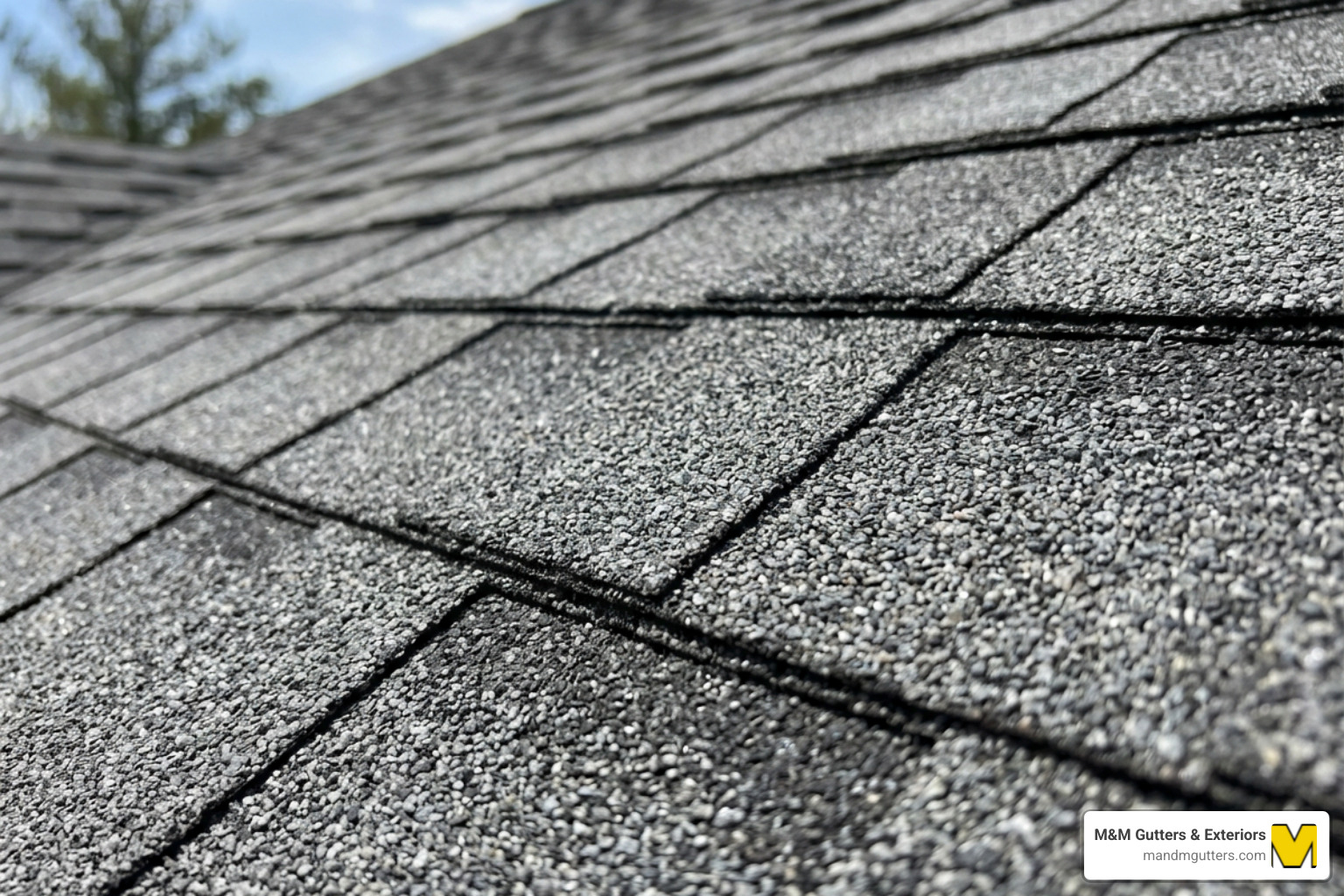
Architectural shingles (also known as dimensional or laminate shingles) are a significant step up from the old-school 3-tab shingles you might see on older homes. While 3-tab shingles are flat and uniform, architectural shingles feature a layered construction. They consist of a heavy fiberglass mat base coated with specially formulated asphalt and topped with ceramic-coated mineral granules.
The primary advantage of these shingles is their aesthetic depth. They are designed to mimic the look of natural wood shakes or slate. Beyond looks, their multi-layered thickness makes them much heavier and more durable than traditional asphalt, often carrying wind resistance ratings of up to 110–130 mph. For many in Utah, this is the go-to choice because it balances beauty with a manageable price tag. You can learn more about these and other roofing materials and types in our detailed guide.
Common Materials Used in Modern Metal Roofing
Metal roofing has come a long way from the corrugated tin roofs of the past. Today’s residential metal roofs are sophisticated systems made from several different materials:
- Steel: The most common residential choice, usually galvanized (zinc-coated) or galvalume (aluminum and zinc-coated) to prevent rust.
- Aluminum: Highly resistant to corrosion, making it a favorite for areas with high moisture.
- Copper and Zinc: Premium options that develop a natural “patina” over time. These can literally last a century but come with a much higher price tag.
Modern metal roofs come in various styles, including standing seam (where the fasteners are hidden under a vertical rib) and stone-coated steel, which can be stamped to look exactly like traditional shingles or tiles.
Cost Analysis: Upfront Investment vs. Long-Term ROI
Let’s talk numbers, because this is usually where the architectural shingles vs metal roof debate gets heated.
Lifespan and Replacement Frequency
The most important thing to understand is the “lifecycle cost.” As we often tell our neighbors in Summit County, a roof that lasts twice as long isn’t just twice as good—it’s often significantly cheaper in the long run.
Architectural shingles typically last between 20 and 40 years. However, in the harsh Utah sun and heavy snow cycles, we often see them needing replacement closer to the 25-year mark. Metal roofs, on the other hand, are routinely rated for 50 to 70 years. Some premium metals can even last 100 years with proper care.
Think of it this way: Over a 60-year period, you might pay for one metal roof ($17,457 on average for a standard home) or three separate asphalt shingle roofs ($26,211 total). The “cheaper” option actually ends up costing nearly $9,000 more over time. If you want to dive deeper into local longevity, check out our post on how long a roof lasts in Utah.
Resale Value and Homeowner ROI
According to the 2024 Cost versus Value Report, asphalt shingle replacements currently offer a slightly higher immediate resale value percentage (57%) compared to metal roofs (48%).
Why is that? It mostly comes down to the high initial cost of metal. While a metal roof adds more absolute value to a home because of its durability and energy efficiency, the sheer cost of installation means you “recoup” a smaller percentage of that specific investment if you sell the house immediately. However, for a buyer, a 50-year metal roof is a massive selling point because they know they will likely never have to replace the roof as long as they live there.
Performance and Durability in Extreme Weather
Utah weather is no joke. From the intense UV rays in Tooele to the heavy snow loads in Weber County, your roof takes a beating.
Choosing the Best Fit: Architectural Shingles vs Metal Roof for Your Climate
Metal roofs are the undisputed kings of snow management. Their slick surface and heat-reflective properties help snow slide off easily, which prevents the heavy accumulation that leads to structural stress. This also significantly reduces the risk of ice dams—those nasty ice ridges that form at the edge of your roof and force water back under your shingles.
Architectural shingles perform well, but they are “absorptive.” They hold onto heat and moisture more than metal does. Over decades of freeze-thaw cycles, this can lead to granule loss and shingle curling. If you’re weighing these factors, our breakdown of metal roofing pros and cons offers more technical insights.
Maintenance Requirements and Repair Costs
Metal roofs are generally “set it and forget it.” Aside from an occasional inspection of the fasteners and clearing out the gutters, they require very little work. Architectural shingles require a bit more babysitting. You’ll need to watch for:
- Granule Loss: Bald spots on shingles mean the asphalt is exposed to UV damage.
- Mold and Algae: In shaded areas, shingles can develop dark streaks.
- Wind Damage: Even high-quality shingles can occasionally lift or tear in a severe storm.
If you start seeing these issues, it might be time to consult our guide on 12 signs you need a new roof.
Aesthetics, Sustainability, and Installation Factors
Your roof accounts for up to 40% of your home’s visible exterior. It has to look good!
Aesthetic Appeal: Can Metal Roofs Mimic Architectural Shingles?
A common myth is that metal roofs always look like industrial warehouses. That couldn’t be further from the truth. With stone-coating technology, we can install metal roofs that look virtually indistinguishable from high-end architectural shingles or cedar shakes. You get the “textured” look that homeowners love with the “bulletproof” durability of steel.
For those who love a modern aesthetic, standing seam metal offers clean, crisp lines that look stunning on contemporary Utah homes. Conversely, if you prefer a traditional look, architectural shingles offer a massive variety of colors and “shadow lines” that provide great curb appeal at a lower price point. We discuss these aesthetic trade-offs more in our article on the cost of a roof replacement in Utah.
Installation Complexity and Contractor Availability
This is one area where architectural shingles win hands down. Almost every roofing contractor knows how to install shingles. They are lightweight, easy to cut, and can be installed quickly.
Metal roofing is a different beast. It requires specialized tools and a high level of skill to ensure the panels are squared and the flashing is watertight. Because the panels are larger and can be slippery, labor costs are significantly higher. We always recommend checking a contractor’s experience with specific roofing felt standards and underlayment before letting them touch a metal installation.
Frequently Asked Questions about Architectural Shingles and Metal Roofs
Can you install a metal roof over existing architectural shingles?
Yes, in many cases, you can! This is called “retrofitting.” Because metal roofing is so lightweight (1-3 lbs per sq ft compared to 2-4 lbs for shingles), many local building codes in Salt Lake and Utah County allow for a second layer. This saves you the labor cost of a “tear-off” and keeps old shingles out of the landfill. However, we always inspect the roof deck first to ensure there is no hidden rot.
Which option offers better energy efficiency and cooling costs?
Metal is the clear winner here. Metal roofs reflect solar radiant heat rather than absorbing it. This can reduce cooling costs by 10-25%. While shingles use granules to dissipate UV rays, they still hold onto heat much longer than metal panels do.
What warranties and insurance benefits are available?
Because metal roofs are so durable, many insurance companies (like Progressive and State Farm) offer premium discounts for homes with metal roofing, especially those with a Class 4 impact rating. Architectural shingles come with great manufacturer warranties (often 30 years to “lifetime”), but these are usually prorated over time. Check out our post on does home insurance cover roof replacement for more details on navigating claims.
Conclusion: Making the Final Verdict
So, in the battle of architectural shingles vs metal roof, who wins?
- Choose Architectural Shingles if: You are on a tighter budget, you plan on moving in the next 5-10 years, or you prefer the classic look of traditional shingles. They offer excellent protection and a beautiful aesthetic for a fraction of the upfront cost.
- Choose a Metal Roof if: You are looking for a “forever roof,” you want to maximize your home’s energy efficiency, or you live in an area prone to heavy snow and high winds. The long-term savings and peace of mind are well worth the initial investment.
At M&M Gutters & Exteriors, we’ve spent three decades helping Salt Lake City homeowners find the perfect fit for their homes. We even use 3D visualization technology to show you exactly how each option will look on your house before we ever drive a single nail.
Ready to see the difference for yourself? Get a professional roofing estimate from our team today and let’s build a roof that lasts.