


What Are Gutter Heating Elements — and Do You Need Them?
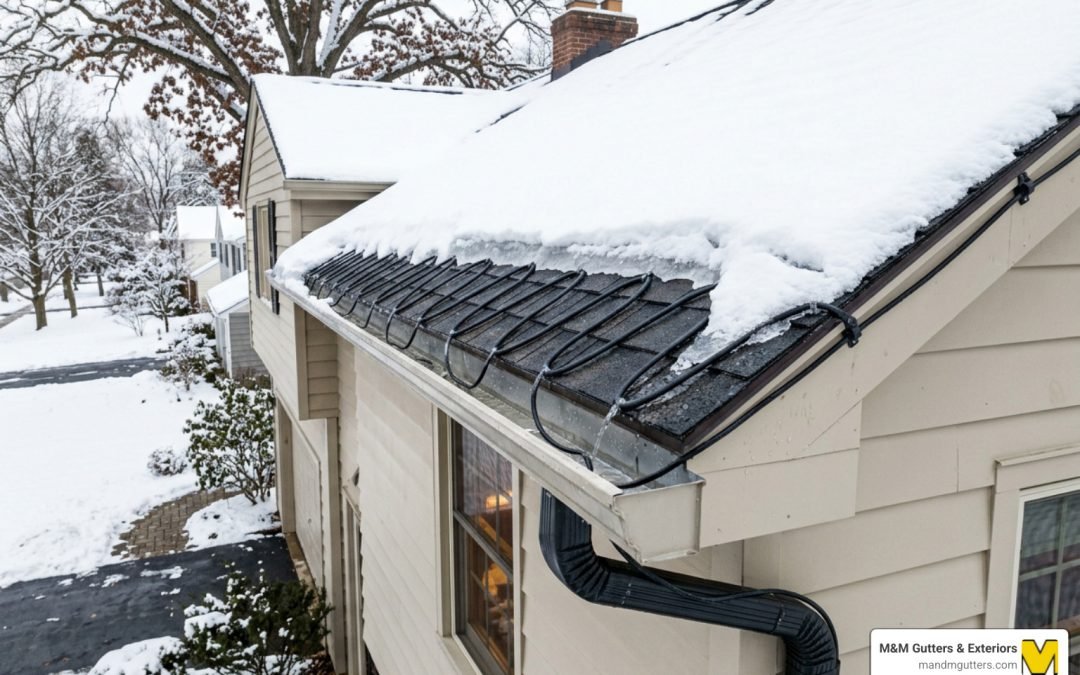
Gutter heating elements are electric cables or ribbons installed in your gutters, downspouts, and along roof edges to melt snow and ice before it causes damage.
Here’s a quick overview of the most common types:
| Type | How It Works | Best For |
|---|---|---|
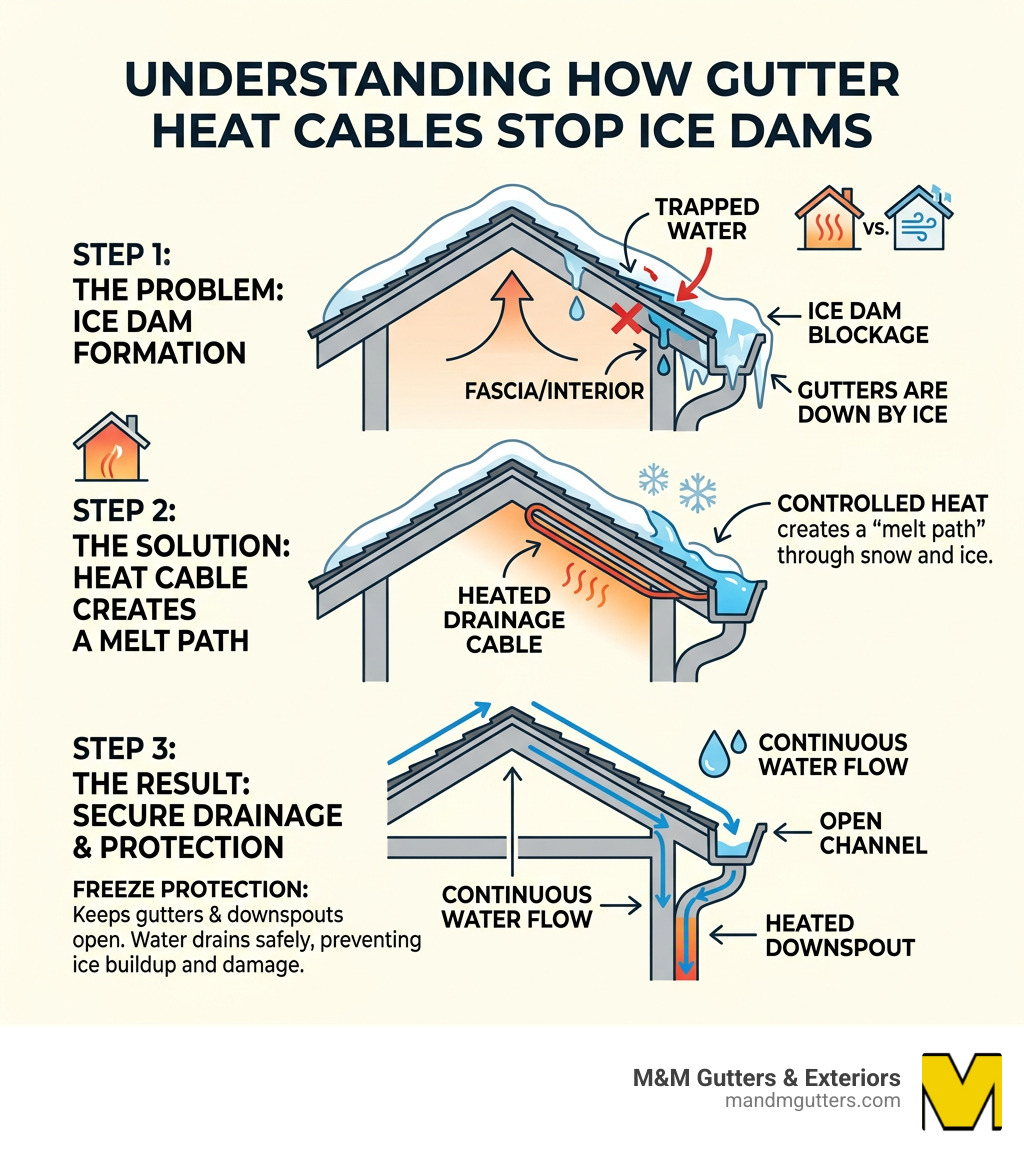
| Self-regulating cable | Adjusts heat output based on temperature | Most homes, energy efficiency |
| Constant wattage cable | Fixed heat output at all temperatures | Extreme cold, heavy snow loads |
| Low-voltage panels | Thin heating elements under shingles | Full eave protection |
| Amorphous metal ribbons | Ultra-thin strips inside gutters | Low-profile, single-pass install |
Every winter, homeowners across Salt Lake City watch ice build up in their gutters — and then watch the damage bills roll in. Ice dams form when snow melts on a warm roof, runs down to the cold eave, and refreezes. That trapped water backs up under shingles, into walls, and onto ceilings. Gutters can pull away from the fascia under hundreds of pounds of ice. It’s a slow-motion problem that hits hard and fast.
The good news: the right gutter heating system stops this cycle before it starts.
I’m Nathan Nuttall from M&M Gutters & Exteriors, and after 30 years helping Utah homeowners protect their homes from winter damage, gutter heating elements are one of the most effective upgrades I recommend for properties in cold climates. In this guide, I’ll walk you through the best systems available so you can pick the right one with confidence.
Understanding Gutter Heating Elements and How They Work
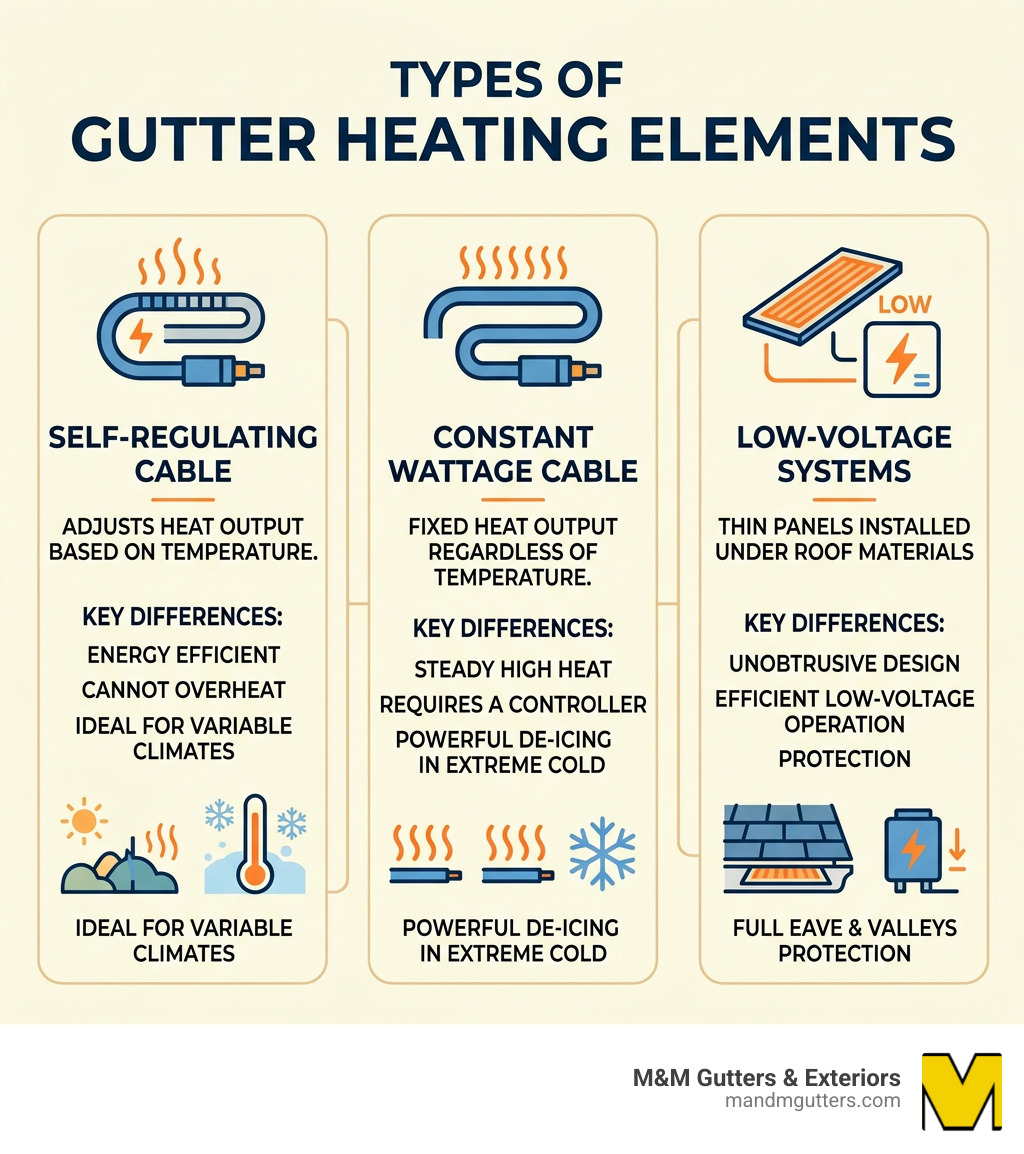
Living in the Wasatch Front, we are no strangers to the “freeze-thaw” cycle. One day it’s a beautiful snowy landscape, and the next, the sun peeks out just enough to melt the top layer of snow on your roof. That water trickles down to the eaves, which stay much colder because they overhang the house. The result? A massive ridge of ice known as an ice dam.
Gutter heating elements, often called heat trace or de-icing cables, are the frontline defense against this. But how exactly do they work? Think of them as a controlled electric blanket for your roof’s drainage system. These cables provide targeted thermal output to create a “melt path.”
When snow hits the heated area, it melts into liquid water. The cable then guides that water through the gutter and down the downspout, preventing it from refreezing into a solid block of ice. This ensures constant water flow even when the thermometer dips well below freezing.
An effective ice melting system doesn’t necessarily need to melt every snowflake on your roof. Instead, its primary job is freeze protection—keeping the “veins” of your home (the gutters and downspouts) open so the roof can breathe and drain. Without this path, ice builds up, weighing down your gutters and potentially causing them to drop hundreds of pounds of ice onto your siding or landscaping.
Types of Gutter Heating Elements: Self-Regulating vs. Constant Wattage
When you start shopping for gutter heating elements, you’ll quickly realize not all cables are created equal. The two heavy hitters in the industry are self-regulating cables and constant wattage cables. Choosing between them depends on your budget, your local climate (hello, Park City winters!), and how much you want to spend on your monthly power bill.
| Feature | Self-Regulating Cable | Constant Wattage Cable |
|---|---|---|
| Core Technology | Conductive polymer core | Metal heating filament |
| Heat Output | Adjusts based on outside temp | Stays the same regardless of temp |
| Energy Efficiency | High (throttles down when warm) | Lower (runs at 100% power) |
| Safety | Can be overlapped safely | Cannot be overlapped (fire risk) |
| Lifespan | Long-lasting, industrial grade | Moderate |
| Customization | Can be cut to length on-site | Usually sold in fixed lengths |
Beyond these two, there are specialized options like amorphous ribbons and low-voltage systems. For example, Gutter Deicing | Calorique offers ultra-thin ribbons that provide a low-profile look. There are also ice melting systems designed to sit entirely under the shingles for a completely invisible finish.
Benefits of Self-Regulating Gutter Heating Elements
Self-regulating (or self-limiting) technology is the gold standard for most Utah residential applications. These cables feature a special conductive core that reacts to the ambient temperature. When it’s freezing, the core contracts, allowing more electricity to flow and generating more heat. As the sun comes out and the temperature rises, the core expands, reducing the wattage and saving you money.
One of the biggest perks is safety. Because they modulate their heat, these cables won’t burn themselves out if they happen to touch or overlap in a crowded gutter. This makes them much more durable and gives them a longer longevity compared to cheaper “heat tape” options found at big-box stores. Understanding how an ice melting system works with self-regulating technology is key to realizing why they are the preferred choice for modern homes.
When to Choose Constant Wattage Gutter Heating Elements
While self-regulating cables are great for efficiency, constant wattage cables are the workhorses for extreme cold. If you live in a high-elevation area like Summit County, where temperatures regularly stay in the negatives, you might need the “brute force” of constant wattage.
These systems deliver a fixed amount of heat regardless of the surrounding temperature. They are effective down to -40°F and are excellent for heavy snow loads where you need maximum melting power 100% of the time. However, they require professional control systems (like thermostats and sensors) to ensure they aren’t wasting energy when it’s 45 degrees outside. When asking what is the best ice melting system, the answer often depends on whether you value energy savings or sheer melting power.
Essential Components for an Effective De-Icing System
A spool of cable by itself isn’t a “system.” To protect your home effectively, you need several high-quality accessories to ensure the gutter heating elements turn on when they should and stay off when they shouldn’t.
- Sensors and Controllers: A Gutter Ice Sensor is a game-changer. These sensors detect both moisture and temperature. Why run your heaters when it’s 20 degrees but bone-dry? The sensor ensures the system only activates when there is actual ice or snow present.
- Thermostats: For simpler setups, a basic thermostat like the Thermo Cube can turn the power on at 35°F and off at 45°F.
- GFEP Breakers: This is a safety must-have. The National Electric Code (NEC) requires Ground Fault Equipment Protection (GFEP) for outdoor de-icing systems. This is different from the GFCI outlets in your bathroom; GFEP is designed to handle the higher “leakage” currents common in long heating cables without tripping unnecessarily.
- Downspout Hangers and Roof Clips: You can’t just throw the cable in the gutter and hope for the best. Specialized clips hold the cable in a serpentine pattern on the roof, while hangers ensure the cable stays centered in the downspout to prevent “ice tunneling.”
Installation and Sizing Your Roof and Gutter Heat Trace Cables
Getting the right amount of cable is half the battle. If you buy too little, you’ll leave gaps where ice can still form. If you buy too much, you’re wasting money.
Calculating Linear Footage
To calculate the length needed, you have to account for more than just the length of your gutters. You need to factor in:
- The Eave Overhang: The wider your eaves, the “taller” the zigzag pattern (sine wave) needs to be on your roof.
- Downspouts: You need enough cable to go all the way down to the bottom and back up (or at least all the way out the discharge).
- Valleys: Roof valleys collect the most snow, so they usually require extra loops of cable.
The Sine Wave Pattern
On the roof edge, we install cables in a sine wave or “zigzag” pattern. This ensures that even if an ice dam tries to form, the cable cuts “chimneys” through the ice, allowing water to escape.
When it comes to the actual work, you’ll face the classic dilemma: Roof heat cable installation: DIY vs hiring a pro. While pre-terminated kits are available for DIYers, professional installation ensures that the cables are spaced correctly to protect your shingles and that the electrical load won’t blow your breakers. There are many steps and considerations for installing roof heat tape that a professional will handle, such as ensuring proper shingle protection and valley drainage.
Are Heated Gutters Worth the Investment?
We get this question a lot: “Are they really worth the cost?”
Let’s look at the numbers. High-quality gutter heating elements cost between $10 and $25 per linear foot, and professional installation can range from $500 to $2,000 depending on the size of your home. Operating them might add $10 to $50 to your monthly power bill during the winter.
However, compare that to the alternative. A single major ice dam can cause thousands of dollars in structural damage. We’ve seen gutters literally ripped off the house by the weight of the ice. We’ve seen flooded basements because the downspouts were frozen solid, forcing water to pool at the foundation.
Investing in an ice melting system is essentially an insurance policy for your home’s exterior. It extends your gutter lifespan and maintains your property value. Plus, knowing how to prevent ice dams now saves you from the stress of a leaking ceiling in February. If you’re planning an upgrade, the best time to install an ice melting system is in the late summer or fall—before the first Utah snowflake hits the ground!
Frequently Asked Questions about Gutter Heating Elements
How much electricity do gutter heaters use?
It depends on the cable type and how often it runs. Most self-regulating cables use about 5 to 8 watts per linear foot when it’s freezing. If you have 100 feet of cable, that’s roughly the same as running a few old-fashioned light bulbs. Using sensors and thermostatic controls can drastically reduce your monthly energy bills by ensuring the system only runs when necessary.
Can I install heat cables on a metal roof?
Absolutely! In fact, metal roofs often need them more because snow tends to slide down them all at once, creating massive “snow curls” at the edge. We use specialized clips or heat ribbons designed for metal surfaces to ensure the system stays secure without damaging the finish.
How long do gutter heating systems last?
A high-quality, industrial-grade system (like GutterMelt or ProLine) often comes with a 10-year manufacturer warranty. With basic maintenance—like clearing leaves out of your gutters so the cable doesn’t get buried in muck—you can expect a professional system to last 10 to 20 years. UV resistance is built into the outer jackets to prevent the sun from making the cables brittle over time.
Conclusion
Winter in Utah is beautiful, but it can be brutal on your home. Don’t let ice dams turn your castle into an igloo this year. Whether you choose self-regulating cables for their efficiency or a low-voltage system for a sleek look, the right gutter heating elements will keep the water flowing and your roof protected.
At M&M Gutters & Exteriors, we have over 30 years of experience helping homeowners in Salt Lake City, Davis County, and throughout Northern Utah navigate the challenges of our local climate. We don’t just “slap on some heat tape”—we design custom solutions using HOVER 3D visualization to ensure every valley and downspout is covered.
Ready to stop the Ice Age before it starts? Protect your home with a professional ice melting system and enjoy a worry-free winter. Give us a call today, and let’s get your home ready for whatever Mother Nature throws our way!