


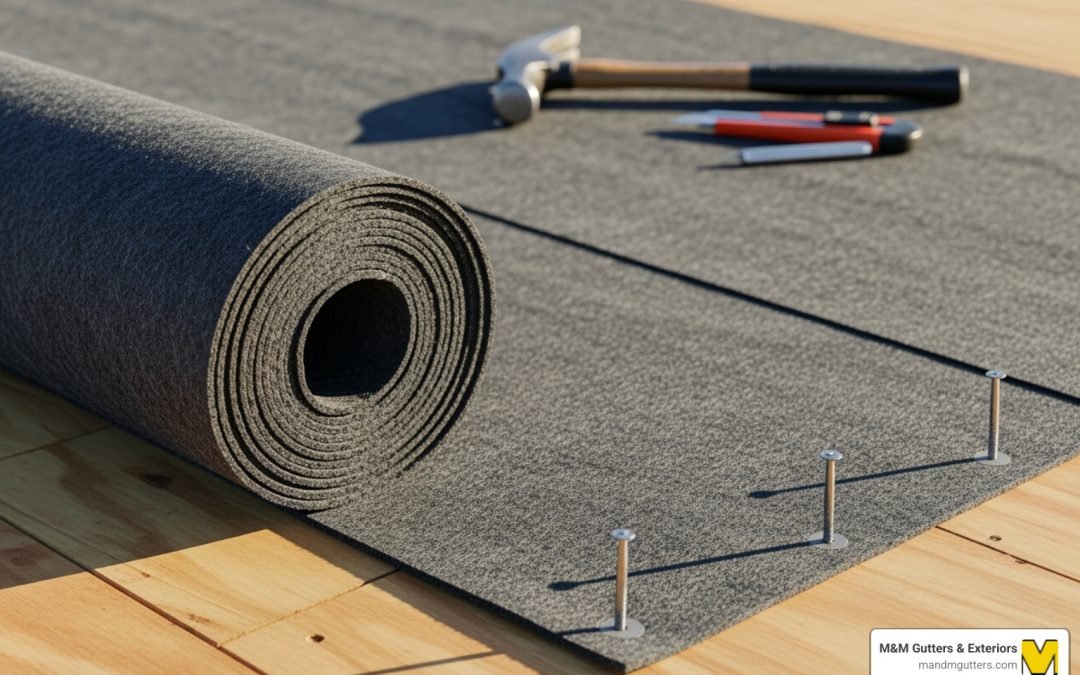
Why Choosing the Right Underlayment Matters for Your Roof
30 pound felt is an asphalt-saturated roofing underlayment that serves as a secondary weather barrier beneath your primary roofing material. Here’s what you need to know:
Quick Answer:
- What it is: Heavy-duty organic felt saturated with asphalt, weighing approximately 30 pounds per 100 square feet (historically)
- Coverage: Standard rolls cover 2 squares (200 sq. ft.)
- Primary use: Underlayment beneath asphalt shingles, wood shakes, and other roofing materials
- Key benefit: Provides water resistance, improved traction during installation, and fire resistance
- Standards: Meets ASTM D226 Type II or ASTM D4869 Type II specifications
- Cost: More affordable than synthetic alternatives, typically priced lower per square foot
If you’re planning a roof replacement or repair, you’ve probably heard about 30 pound felt and wondered whether this traditional material is still the best choice. With newer synthetic underlayments gaining popularity, it’s a valid question.
The reality is that 30 lb felt has protected roofs for decades through a simple but effective approach: organic felt saturated with asphalt creates a breathable, water-resistant barrier that keeps moisture out while allowing vapor to escape. According to product specifications, this material acts as a secondary barrier in case of shingle loss and contributes to fire resistance for added safety.
But times have changed. Synthetic underlayments now offer lighter weight, higher tear strength, and longer UV exposure limits. So is the classic choice still right for your Utah home?
The answer depends on your specific situation, budget, and roofing goals. Some homeowners prioritize the proven track record and lower cost of felt. Others value the performance advantages of synthetic materials, even at a higher price point.
I’m Nathan Nuttall, and over my 30 years serving Utah homeowners at M&M Gutters & Exteriors, I’ve installed countless roofs using both 30 pound felt and synthetic underlayments. I’ll help you understand the real differences so you can make the best choice for your home and budget.
What is 30 Pound Felt and Why is it a Classic Choice?
When we talk about 30 pound felt, we’re referring to a time-honored roofing underlayment that has been a foundational element of roofing systems for generations. It’s essentially a robust layer of protection that goes directly onto your roof deck before the final roofing material, like shingles or wood shakes, is installed. Think of it as the unsung hero beneath your roof’s surface, diligently working to keep your home dry and secure.
This material is manufactured from superior quality organic felt, which is then thoroughly saturated with asphalt. This asphalt saturation is key; it’s what gives the felt its water-resistant properties, helping to prevent moisture from penetrating your roof deck. APOC’s #30 Felt, for example, is engineered with superior asphalt saturation for improved waterproofing, while also being a breathable membrane that allows air vapor to transmit while keeping water out. This breathability is crucial for preventing moisture buildup within your roof system, which can lead to issues like mold or premature deck damage.
The primary role of 30 pound felt is to act as a secondary weather barrier. This means that if your primary roofing material, such as your shingles, gets damaged or displaced by a strong gust of wind during one of Utah’s summer storms, the felt underneath is there to provide a crucial layer of defense against leaks. It’s like having a backup goalie in a hockey game – ready to step in when needed! Beyond its leak prevention capabilities, 30 pound felt also contributes to the fire resistance of your overall roofing system, adding another layer of safety for your home and family.
Understanding the “Pound” Designation
The “30 pound” in 30 pound felt is a historical designation. Traditionally, it referred to the approximate weight of 100 square feet (one roofing square) of the material. However, with advancements in manufacturing and variations in product dimensions, this “pound” designation has evolved more into a classification for thickness and durability rather than a precise weight-per-square measurement.
Modern 30 pound felt products, like APOC’s #30 Felt, might come in rolls weighing around 56 lbs, covering about 216 sq ft (which is slightly more than two roofing squares of 100 sq ft each). On the other hand, a product like G.A.P. 30 Jumbo Split felt, which is an 18″ underlayment, weighs 28 lbs and covers 108 sq ft. These variations highlight that while “30 pound” indicates a heavier, more robust felt compared to its lighter counterpart, 15 lb felt, the actual weight per roll or per square can differ based on the specific product and its dimensions.
The key takeaway is that 30 pound felt is a thicker, more durable option than 15 lb felt. This increased material density provides improved protection, greater tear resistance, and often improved footing for installers, which is a significant safety benefit, especially on steep-sloped roofs. It typically meets rigorous industry standards such as ASTM D226 Type II and ASTM D4869 Type II, ensuring its quality and performance.
Primary Uses in Modern Construction
30 pound felt is a versatile and reliable choice for a variety of roofing applications, both residential and commercial. Its robust nature makes it suitable for demanding conditions, offering long-term durability.
In residential roofing, it’s a go-to underlayment for asphalt shingles. We’ve seen it perform admirably under diverse conditions across Salt Lake City, Utah County, and the surrounding areas. The felt provides a smooth, uniform surface for shingle adhesion, improving the overall integrity and lifespan of the roof.
Beyond asphalt shingles, 30 pound felt is also an excellent choice as an underlayment for wood shake shingles. G.A.P. 30 Jumbo Split felt, for instance, is specifically designed for application over the roofing deck before the installation of wood shake shingles, providing that critical layer of protection. This makes it a great option for those looking for a rustic, natural look without compromising on performance.
Whether you’re considering traditional asphalt shingles or exploring other options, understanding the role of underlayment is crucial. If you’re weighing the pros and cons of different roofing materials, our guide on Metal Roof vs Shingles might offer additional insights into your primary roofing choice. For steep-slope roofs, the added thickness and durability of 30 pound felt are particularly beneficial, providing extra resistance against water intrusion and a more stable surface for our roofing crews during installation.
The Great Debate: Asphalt Felt vs. Synthetic Underlayment
Choosing the right roofing underlayment is a decision that impacts your roof’s longevity, performance, and even the installation process. For years, asphalt felt reigned supreme, but the advent of synthetic underlayments has introduced a new challenger. It’s a bit like choosing between a classic, reliable pickup truck and a modern, high-tech SUV – both get the job done, but with different features and benefits.
Here at M&M Gutters & Exteriors, we’ve worked with both extensively across Salt Lake County and beyond. Understanding the material technology behind each, their performance differences, cost implications, and installation efficiency is key to making an informed decision for your Utah home. For a broader look at available options, our article on Roofing Materials and Types can provide more context.
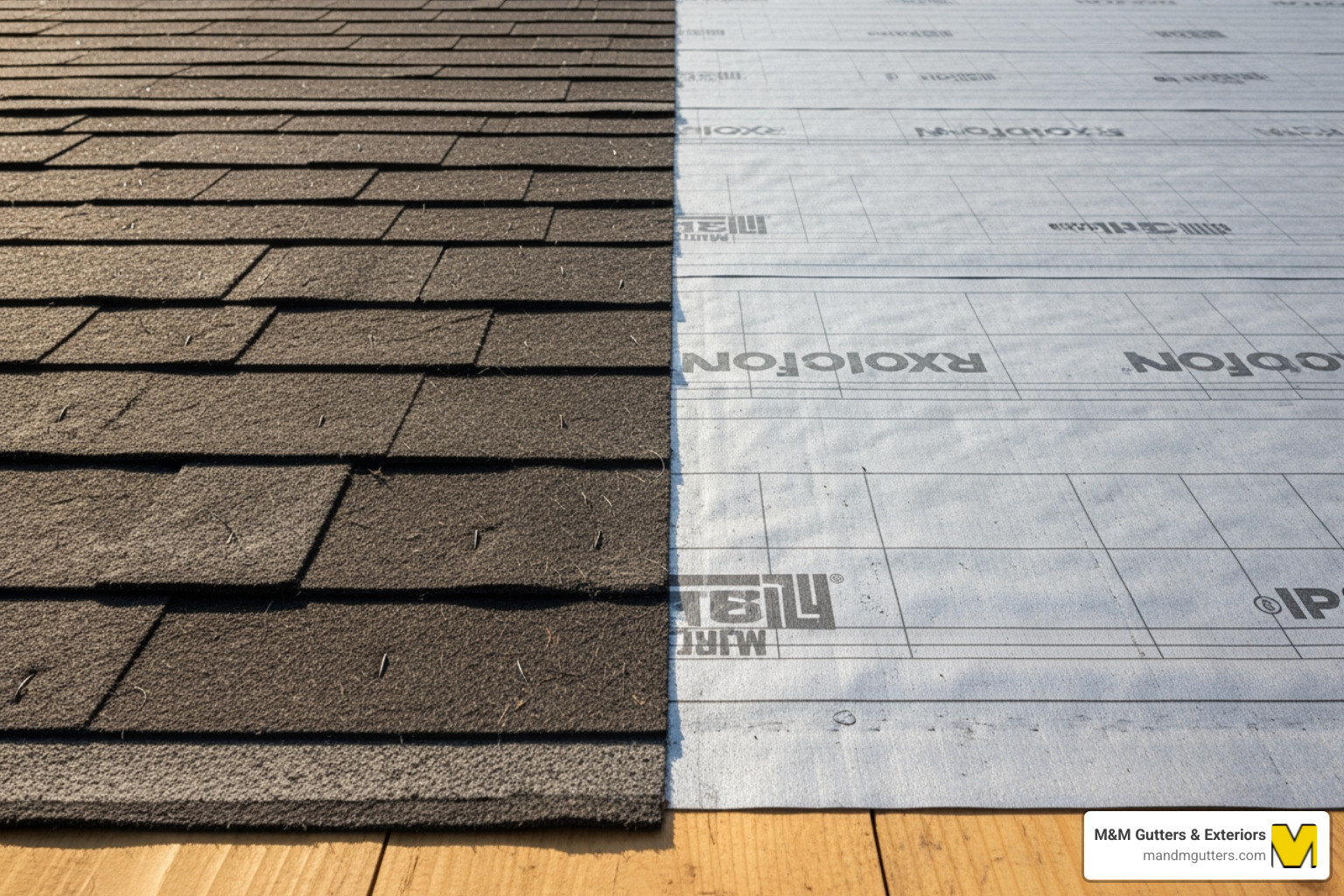
Advantages and Disadvantages of 30 Pound Felt
30 pound felt has earned its “classic choice” status for good reason. It offers a blend of performance and practicality that many homeowners and contractors still appreciate.
Pros of 30 Pound Felt:
- Cost-effective: Generally, 30 pound felt is more affordable per square foot than synthetic alternatives, making it an attractive option for budget-conscious projects.
- Time-tested reliability: With decades of proven performance, we know what to expect from felt. It has a long track record of providing effective secondary weather protection.
- Breathability: Organic felt saturated with asphalt allows for the transmission of air vapor while keeping water out. This “True-Breathe™ Technology,” as seen in some products, helps prevent moisture from getting trapped, which is vital in our varied Utah climate.
- Slip resistance: The textured surface of 30 pound felt provides better footing during installation, improving safety for our roofing crews. As one statistic noted, it “improves footing during installation.”
- Fire resistance: 30 pound felt contributes to the overall fire resistance of the roofing system, adding a layer of safety.
- Self-sealing around fasteners: The asphalt in the felt has a degree of self-sealing capability around roofing nails, which can help prevent leaks.
Cons of 30 Pound Felt:
- Heavy weight: A standard roll can weigh around 56 lbs, making it heavier and more cumbersome to transport and install compared to lightweight synthetics. G.A.P. 30 Jumbo Split felt is 28 lbs per roll, but it’s also a narrower product.
- Prone to tearing: While durable, felt can be more susceptible to tearing or puncturing during installation, especially if not handled carefully, or in windy conditions before the primary roofing is laid.
- Wrinkles in heat: In hot weather, felt can absorb moisture and then dry out, leading to wrinkles or buckling. While some products, like GAP Roofing 30 lb. Roofing Felt, feature a “heavy-duty design that prevents wrinkles,” this remains a potential concern for felt in general if not properly installed.
- Lower coverage per roll: A typical roll of 30 pound felt covers 2 squares (200 sq. ft.), meaning more rolls are needed for a large roof compared to synthetics, which often come in much larger rolls.
- Shorter UV exposure limit: Felt is not designed for prolonged exposure to direct sunlight and should be covered by the primary roofing material relatively quickly (typically within a few days to a few weeks).
The Case for Synthetic Underlayment
Synthetic underlayments have emerged as a strong contender, offering modern solutions to some of felt’s traditional drawbacks. These materials are typically made from polypropylene or polyethylene, often reinforced for extra strength.
Pros of Synthetic Underlayment:
- Lightweight: Synthetic rolls are significantly lighter than felt, making them easier and faster to carry, maneuver, and install on a roof deck.
- High tear strength: Synthetics are engineered to be highly resistant to tearing, puncturing, and blow-offs, providing a very robust secondary barrier.
- High coverage per roll: Synthetic underlayments often come in larger rolls, covering significantly more square footage (e.g., 1000 sq. ft. or more) per roll. This means fewer rolls to handle and faster installation times.
- Water-repellent: Many synthetics are completely waterproof, offering superior protection against water intrusion compared to felt’s water-resistance.
- Longer UV exposure limit: Most synthetic underlayments can withstand exposure to UV rays for several months, providing greater flexibility in construction schedules.
- Mold and mildew resistant: Unlike organic felt, synthetic materials are inorganic and do not support mold or mildew growth.
Cons of Synthetic Underlayment:
- Higher initial cost: Synthetics typically have a higher upfront cost per square foot than 30 pound felt.
- Can be slippery: Some synthetic underlayments, especially when wet or dusty, can be quite slick, posing a safety hazard during installation. Manufacturers have addressed this with textured surfaces on newer products, but it’s still a consideration.
- Traps moisture if not breathable: While many modern synthetics are breathable, not all are. Non-breathable synthetics can potentially trap moisture if installed improperly, leading to condensation issues.
Table Comparing 30 Pound Felt and Synthetic Underlayment
| Feature | 30 Pound Felt | Synthetic Underlayment |
|---|---|---|
| Material | Organic felt saturated with asphalt | Polypropylene or polyethylene |
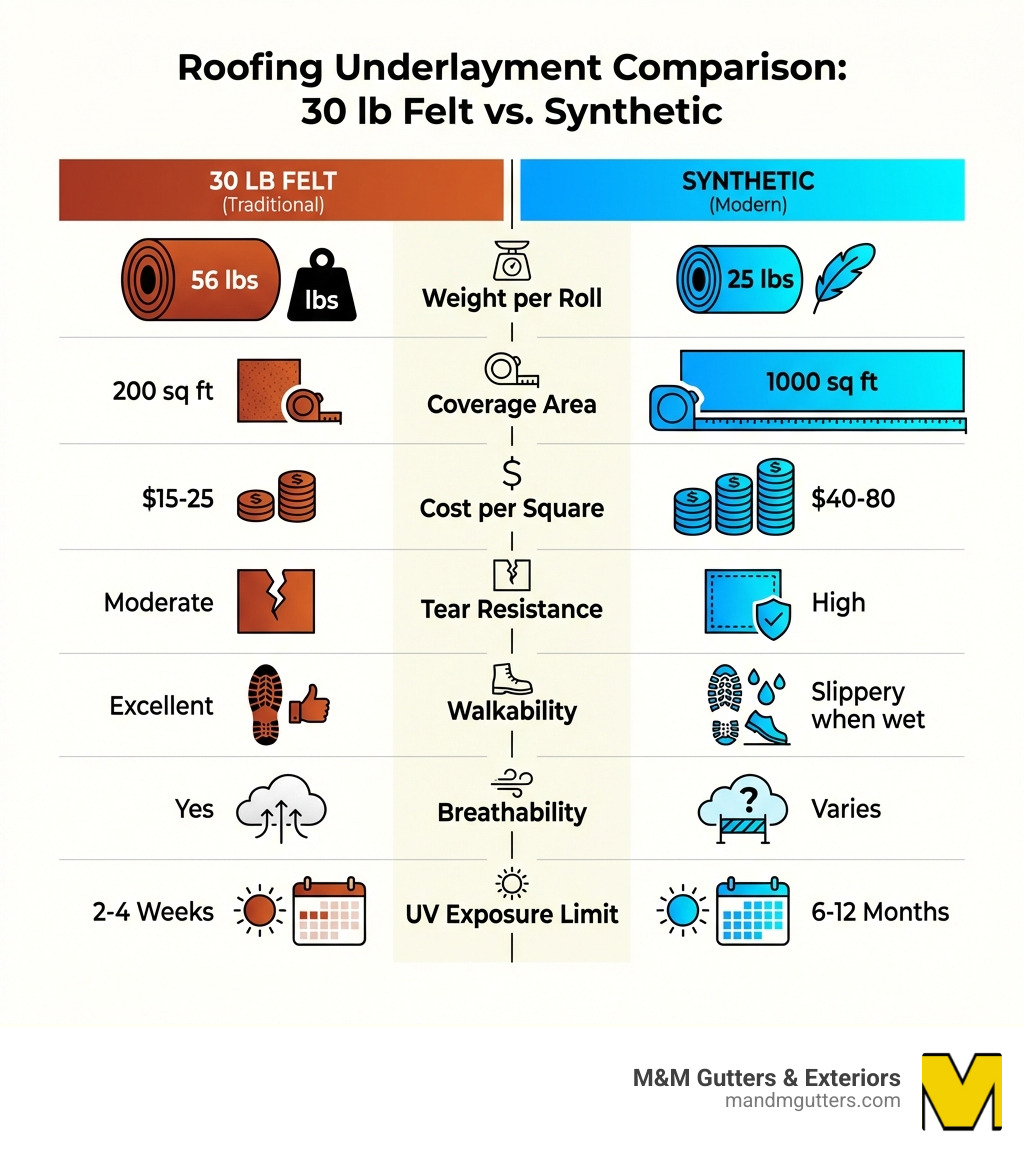
| Weight per Roll | ~28-56 lbs (for 100-216 sq ft coverage) | ~25-45 lbs (for 400-1000+ sq ft coverage) |
| Tear Resistance | Moderate | High |
| UV Exposure Limit | 2-4 weeks | 6-12 months (product dependent) |
| Cost | Lower (typically $15-25 per square) | Higher (typically $40-80 per square) |
| Walkability | Excellent (good footing, less slippery) | Varies (can be slippery when wet, some have textured surfaces) |
| Breathability | Yes (allows vapor transmission) | Varies (some are breathable, some are not) |
| Water Protection | Water-resistant (secondary barrier) | Waterproof (primary barrier potential) |
| Installation Speed | Slower (due to weight, smaller rolls) | Faster (due to lightweight, larger rolls) |
| Wrinkling | Can wrinkle in heat/moisture changes (some designs combat this) | Minimal to none |
Installation and Performance of 30 pound felt
Proper installation is paramount to ensuring any roofing material performs as intended, and 30 pound felt is no exception. While it’s a traditional material, adhering to best practices during installation is crucial for maximizing its protective qualities and contributing to the overall health of your roof.
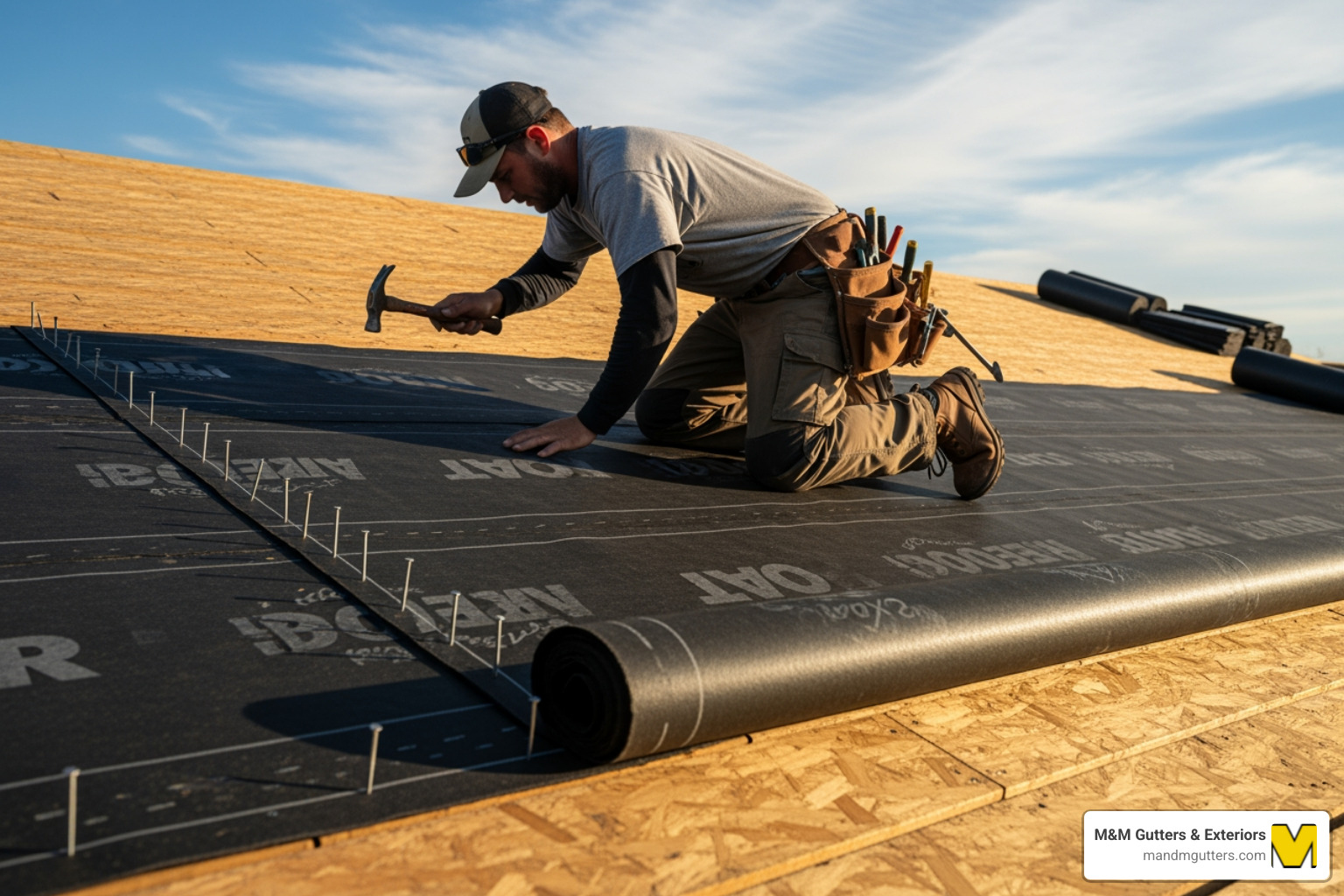
When we install 30 pound felt, we follow specific guidelines to ensure a tight, secure, and effective barrier. This includes proper overlapping of seams, typically 2 to 4 inches horizontally and 6 inches vertically, to prevent water intrusion at these vulnerable points. Fastening methods usually involve roofing nails or staples, spaced appropriately to hold the felt securely against the roof deck, especially important in areas prone to high winds like parts of Salt Lake City. Some products, like GAP Roofing 30 lb. Roofing Felt, even feature “accurate lay lines that allow hassle-free application,” which helps our crews maintain consistent overlaps and achieve a professional finish.
Preventing wrinkles is another key consideration. A heavy-duty design, as mentioned in the research, helps combat this, but careful handling and installation techniques are still essential. Wrinkles can create uneven surfaces under shingles, potentially affecting their adhesion and allowing water to pool. If you ever suspect a leak, inspecting the underlayment’s condition can be part of the diagnostic process. Our guide on How to Find a Roof Leak offers more tips.
How Felt Contributes to Roof Longevity
30 pound felt plays a significant role in the overall performance and longevity of your roof system, acting as a tireless guardian against the elements.
- Secondary Water Barrier: Its primary function is to serve as a crucial secondary water barrier. This means that if wind-driven rain penetrates your primary roofing material or if shingles are damaged or lost, the felt is there to catch the water and direct it off the roof, preventing it from reaching your roof deck and the interior of your home. This “added layer of protection beneath shingles… enhancing leak prevention” is invaluable.
- Protection from Wind-Driven Rain: In areas like Utah, where we can experience strong winds and heavy rainfall, the felt’s ability to shed water, even when under pressure from wind, is vital.
- Preventing Wood Resin Stains: For roofs with wood sheathing, 30 pound felt creates a barrier that prevents the resin from the wood from staining the underside of your shingles, preserving their appearance.
- Extending Shingle Life: By providing a clean, dry, and stable surface, the felt helps the primary roofing material perform better and last longer. It reduces friction between the shingles and the deck and helps to absorb some of the movement caused by thermal expansion and contraction.
- Fire Resistance: As mentioned, 30 pound felt contributes to the fire resistance of the roofing system, offering an additional layer of protection in case of fire.
Understanding these contributions helps you appreciate how much this seemingly simple layer impacts the long-term health of your roof. If you’re noticing signs of wear and tear, it might be time to consider a roof replacement, and our article on 12 Signs You Need a New Roof can help you identify them.
Safety and Handling Considerations for 30 pound felt
Working on a roof always requires careful attention to safety, and the installation of 30 pound felt is no different. We prioritize the safety of our crews, and certain characteristics of felt actually contribute to a safer work environment.
One notable benefit is the “improved footing during installation.” The textured surface of 30 pound felt provides better traction for roofers, especially compared to some smoother synthetic underlayments. This improved grip helps prevent slips and falls, a common concern on sloped roofs.
However, the weight of the rolls also presents a handling consideration. A standard roll of APOC #30 Felt can weigh 56 lbs, which requires proper lifting techniques and teamwork to avoid injury. Even the 18″ wide G.A.P. 30 Jumbo Split felt weighs 28 lbs, so careful handling is always necessary. We ensure our crews are trained in safe lifting practices and use appropriate equipment to move these heavier rolls around the job site, whether it’s in Davis County or Summit County.
When cutting 30 pound felt, sharp utility knives are used, and care must be taken to avoid accidental cuts to oneself or the underlying roof deck. Additionally, while 30 pound felt is generally breathable, working in enclosed or poorly ventilated attic spaces during installation (if applicable) requires awareness of air quality. For comprehensive safety guidelines related to asphalt roofing materials, we often refer to resources like the Asphalt Roofing Manufacturers Association safety guidelines.
Frequently Asked Questions about 30 lb Felt
We often get questions from homeowners in Northern Utah about the specifics of 30 lb felt. It’s a common material, but understanding its nuances can make a big difference in your roofing project. Let’s tackle some of the most frequently asked questions.
How much area does a roll of 30 lb felt cover?
This is a great question, and the answer can sometimes be a little tricky because it depends on the specific product and its dimensions. Generally, when we talk about “2 square coverage,” we’re referring to 200 square feet.
- Standard Rolls: Many standard rolls of 30 lb felt are designed to cover 2 squares, meaning 200 sq. ft. For example, a common roll size might be 36 inches wide by 72 feet long (36″ x 72′), which indeed covers 216 sq. ft., rounding up to 2 squares. This is confirmed by research stating “30lb roofing felt coverage is 2 square (200 sq. ft.).”
- Specialty Rolls: However, some specialty products, like G.A.P. 30 Jumbo Split felt, come in narrower widths. This product is 18 inches wide and covers 108 sq. ft. This is often used for specific applications, such as under wood shake shingles.
When calculating your project needs, it’s crucial to check the specific product’s dimensions and stated coverage area. We always recommend getting a little extra to account for overlaps, waste, and any unexpected cuts. A little surplus is much better than running short in the middle of a job!
Is 30 lb felt waterproof?
This is a critical distinction to make: 30 lb felt is water-resistant, not truly waterproof.
Think of it this way: a high-quality rain jacket is water-resistant—it keeps you dry in a downpour, but if you submerge it in water, it will eventually get soaked. A submarine, on the other hand, is waterproof.
The asphalt saturation in 30 lb felt is designed to repel water and prevent its penetration under normal roofing conditions. It does an excellent job as a secondary barrier, meaning it will protect your roof deck if the primary roofing material (shingles, tiles, etc.) fails or is temporarily absent. The breathability of felt, which allows air vapor to transmit while keeping water out, is part of its water-resistant nature.
However, 30 lb felt is not intended to be exposed to the elements for extended periods as the sole water barrier. It needs the primary roofing material above it to provide the main line of defense. If left exposed to continuous rain or standing water, it can eventually become saturated and compromise its protective qualities. This is why it’s so important to install your primary roofing material relatively quickly after the felt is laid down.
Can you put new felt over old felt?
While it might seem like a shortcut to save time and effort, we generally do not recommend putting new felt over old felt. Here’s why:
- Trapping Moisture: One of the biggest risks is trapping moisture between the two layers. If the old felt has any moisture or if moisture gets in between the layers, it can get trapped, leading to mold, mildew, and rot on the roof deck. This compromises the structural integrity of your roof.
- Uneven Surface: Old felt can be wrinkled, torn, or compressed in places. Laying new felt over an uneven surface will transfer those imperfections to the new layer, potentially creating an uneven base for your new shingles. This can affect shingle adhesion and lead to premature wear.
- Building Codes: Many local building codes, including those we adhere to in Salt Lake City and other Utah counties, require a clean, sound deck before installing new underlayment and roofing. This typically means stripping the old layers down to the bare decking.
- Deck Inspection: Removing the old felt allows us to thoroughly inspect the roof deck for any damage, rot, or soft spots. This is a crucial step to ensure the new roof has a solid foundation. Skipping this inspection means you might be covering up existing problems that could lead to costly repairs down the line.
The best practice is always to strip the roof down to the bare decking, inspect and repair any damage, and then install new underlayment. It might take a little more effort upfront, but it ensures a healthy, long-lasting roof system for your home.
Is 30 Pound Felt the Right Choice for Your Utah Roof?
Deciding on the best underlayment for your roof is a significant choice, and as we’ve explored, 30 pound felt offers a compelling blend of benefits and a proven track record. For homeowners in Salt Lake City, Utah County, and across Northern Utah, understanding whether this traditional material is the ideal fit for your specific needs is key.
30 pound felt continues to be a reliable and cost-effective option for many roofing projects. Its time-tested performance as a secondary water barrier, its breathability, and its contribution to fire resistance make it a strong contender. We appreciate its excellent walkability for our crews, enhancing safety during installation. For those prioritizing budget without sacrificing essential protection, 30 pound felt remains a smart choice.
However, the rise of synthetic underlayments presents valid alternatives, particularly if you’re looking for lightweight materials, superior tear strength, extended UV exposure limits, or a completely waterproof barrier. The decision often comes down to balancing cost, installation flexibility, and specific performance desires.
The “right” choice depends on your specific roof, your budget, the type of primary roofing material you select, and the local climate conditions. For example, if you’re installing wood shake shingles, a product like G.A.P. 30 Jumbo Split felt might be specifically designed for that application.
At M&M Gutters & Exteriors, we bring over 30 years of experience to every roofing project. We’ve seen how both 30 pound felt and synthetic underlayments perform in Utah’s unique weather patterns – from hot summers to snowy winters. We pride ourselves on providing honest, expert advice to help you make an informed decision that suits your home and your wallet. We’ll assess your roof, discuss your options, and explain the pros and cons of each material in the context of your specific situation.
Making an informed decision about your roof’s underlayment is an investment in your home’s future. For professional advice on the best roofing solutions for your home, contact our team today. We’re here to ensure your roof is built to last, providing peace of mind for years to come.