


Are you tired of paying high energy bills because of your old, worn-out windows? Or maybe you’re looking to improve your home security and privacy? If you’re ready to replace your windows, you’ll need to measure them a few times first (for good measure, of course).
In this article, we’ll share how to measure for replacement windows the right way in six easy steps to help you improve the insulation and security of your home. Following our tips, you can save money on your monthly utility bill and protect the ones you love most.
Step 1: Understand Window Measurements
Windows come in different sizes and styles to enhance your home’s function and curb appeal, from sliding and picture windows to casement and double-hung windows. Before contacting M&M Gutters for a window replacement quote, you’ll need to gather the measurements of your window frames and measure them repeatedly for accuracy.
Here’s a quick overview of the measurements you’ll need to speed up the window replacement process. With the correct measurements, you’ll be able to identify the perfect replacement windows to improve your home’s security, function, and value.
Basic Measurement Process
To measure for a window replacement and ensure the proper fit, you’ll need to measure the width, height, depth, corners, and any extra space used for sealing or installation with your existing window opening.
When measuring for replacement windows, make sure you know these three dimensions for the interior window frame:
-
- Head: The horizontal top of your window frame located between each end of the two jambs.
- Jambs: The two vertical sides of your window frame that support and keep your window in place.
- Sill: The horizontal bottom of your window located at the end of the two jambs.
Tools You’ll Need to Measure for Replacement Windows
Before you start measuring for replacement windows, you’ll need a few tools:
-
- A tape measure to find the exact measurements
- A pencil and notepad to write down your measurements
- Ladder (only if you need to reach high windows)
Step 2: Learn How to Measure a Window for Replacement
Once you’ve gathered all the essential tools, it’s time to start measuring the height and width of your window opening and the depth of your window frame. Here’s a step-by-step guide on how to measure windows the right way.
Measure the Width
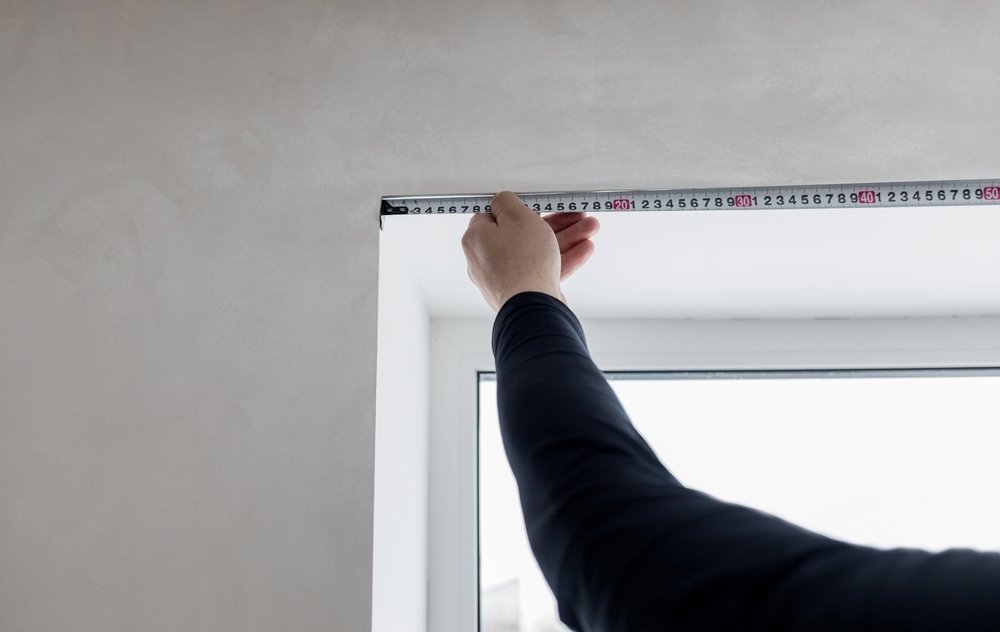
Measure the inside width of your window opening from jamb to jamb at the top, middle, and bottom. Use a notepad or your phone to write down the smallest of the three measurements.
Measure the Height
Using a tape measure, determine the height of your window opening, starting at the top of the head jamb to the bottom of the sill at the left, middle, and right side of your frame. Write down the smallest of the three measurements on your phone or in a notepad.
Measure the Depth
Once you’ve measured the width and height of your opening, you’ll need to prop the window open to measure the depth from the sill to the outside edge of your window frame to ensure your new window replacement is compatible.
Measure the Squareness
Next, you’ll need to check to see if the window frame is square or not. Here’s how to tell:
-
- Use a tape measure to measure diagonally from corner to corner.
- Write down the measurements in your notepad or phone.
- If the measurements are the same, your window frame is square. You’ll need to adjust if your window frame is off by more than ¼ inch.
Measure for Sealing & Installation
Don’t forget to measure the rough window opening (the space in the wall where your new window will be installed) to ensure the replacement fits. Measure from the sill to the header for the height and from stud to stud for the width.
Step 3: Know When to Measure the Frame vs. the Glass
You might wonder, “Do I measure a window by the glass or the frame?” For a window replacement, you only need to measure the frame. If you want to replace only the glass, then the glass is all you need to measure.
Measuring the Frame vs. Measuring the Glass
Luckily, you’ll measure the glass of your window the same way as the frame using a tape measure to determine the width, height, depth, and squareness. Once you’ve gathered these, you’ll also need to account for the frame by subtracting any necessary space for installation.
Why Frame Measurements Matter
Window frame measurements aren’t just for pinpointing what size of windows to invest in. They also impact your energy efficiency and aesthetics. Some homes even require windows to be a specific size for easy escape during an emergency.
Step 4: Measure Inside the Window
In most cases, you’ll measure the inside of your window, not the outside — unless you’re building a new window or looking for a full-frame replacement. If not, you’ll only need to focus on the interior measurements, as the window frame may have shifted over time, especially if you have an older home.
Let’s discuss when to gather interior and exterior measurements for window replacements and a few measuring tips and techniques to use.
Understanding Interior vs. Exterior Window Measurements
If you plan to insert a replacement window in your existing window frame, you’ll gather interior measurements (width, height, depth, etc). If your window frame is damaged or you’re remodeling and need a full-frame window replacement, you’ll gather exterior measurements of your window opening.
Measuring Tips and Techniques
Here are some tips and techniques to keep in mind when measuring for replacement windows.
For interior window measurements:
-
- Measure the width of the frame at the top, middle, and bottom.
- Measure the height of the frame starting from the left of the head jamb to the sill and work your way to the middle and then to the right side.
- Check the depth by opening your window and removing any screens to measure the start of the sill to the outside edge with your tape measure.
- Use a tape measure diagonally from corner to corner to check if your window opening is square.
For exterior window measurements:
-
- Measure the exterior window frame from edge to edge.
- Find the width by measuring the window opening’s top, middle, and bottom.
- Check the height by measuring from the top to the bottom of the rough opening at the left, center, and right sides.
- Measure diagonally from corner to corner to check for a rough squaring opening.
Remember, the rough opening is the framed hole in the wall where your window will sit when everything is installed.
Step 5: Determine Your Window Size
If you’re wondering how to know your window size, the trick is to use your measurements correctly for the type of window replacement you need and avoid common mistakes many homeowners make.
What to Do With Your Window Measurements
After you’ve taken measurements for your window replacement, you’ll need to:
-
- Use the smallest width and height to find your window size.
- See if your window opening is square to ensure a proper fit.
- Subtract ½” from the rough opening to allow insulation room if you plan to have a full-frame replacement.
Common Measurement Mistakes to Avoid
When measuring for replacement windows, avoid these common mistakes we see homeowners make:
-
- Measuring only once: You should always measure a few times to determine the correct size.
- Only measuring the glass, not the frame: Unless you’re replacing it, there’s no need to measure it.
- Forgetting to check the depth: You should always measure this, especially if you plan to replace your existing window frame with an insert window replacement.
- Ignoring if your window opening is square: Your window frame can change anytime, so always measure diagonally.
Step 6: Don’t Forget These Professional Considerations
Even if you’re handy with a tape measure, you must consider a few professional considerations before choosing an insert or full-frame window replacement. Reviewing these factors will give you a better idea of your budget and timeframe.
Moisture
Before you pull out your measuring tape, look for signs of moisture around the inside and outside of your window. If you see mold, mildew, or peeled paint or feel soft wood around the frame, this is a sign you need a full-frame window replacement instead of an insert.
Energy Efficiency
You don’t want your new window replacement to skyrocket your utility bill. Instead, check for air drafts around the window frame and consider a better glass and insulation window. Once you’ve selected a window style, ensure the window opening has a tight fit and is appropriately insulated around the frame.
Window Style
Not every window style is the same. Choose one that matches your home to ensure everything fits properly. If you choose a style different from the one you originally had, you may have to adjust the rough opening, which can change how you measure and install your new window.
Codes and Regulations
Aside from doors, your windows are another way to escape during an emergency. Your window replacements should follow the local building codes and regulations to ensure they are large and easy enough to open and exit through in times of emergency.
When to Seek a Professional
While replacing your windows yourself is rewarding, you can always turn to a professional if needed. If you aren’t confident about how to measure for replacement windows, here are some signs you may need to consider calling an expert for help:
-
- You own an older home.
- You want energy-efficient windows.
- Your windows aren’t properly sealed.
- You prefer a different window style.
- You need a second opinion on whether your window frame is damaged.
- You’re unsure how to measure your window opening and frame properly.
Even if you’re confident in your skills, having a window replacement professional can give you peace of mind and save you money in the long run.
Get in Touch With M&M Gutters
Think it’s time to bring in an expert? Contact M&M Gutters today to receive a quote for professional window replacement and installation.