

What is ASTM D226 and Why Does it Matter for Your Roof?
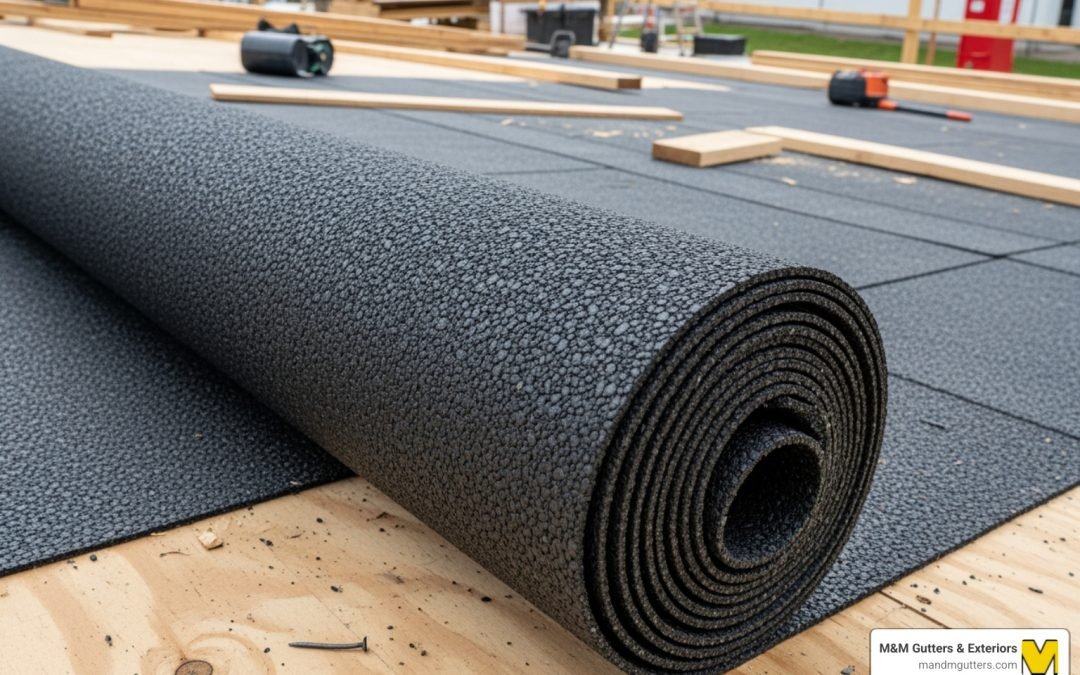
For a quick answer, ASTM D226 is the industry standard that sets specifications for asphalt-saturated organic felt. This felt is used as an underlayment in roofing and waterproofing systems. It ensures the material meets specific quality and performance requirements for protecting your home.
- What it is: An ASTM standard for asphalt-saturated organic felt.
- Purpose: Defines quality and performance for roofing underlayment.
- Types Covered: Type I (commonly called #15 felt) and Type II (commonly called #30 felt).
- Application: Used in built-up roofs and waterproofing systems.
When you think about your roof, you probably picture shingles or tiles. But there’s a vital layer underneath that helps protect your home from the elements: the underlayment. This often-overlooked component acts as a crucial barrier. It shields your home from rain, wind, and moisture, even if your main roofing material gets damaged.
One key material used for this underlayment is roofing felt. To make sure this felt does its job well, the construction industry relies on standards. These standards ensure quality and consistent performance. One of the most important is ASTM D226. This standard covers asphalt-saturated organic felts, which are widely used in roofing and waterproofing applications. Understanding ASTM D226 means understanding a foundational part of your roof’s defense system.
I’m Nathan Nuttall from M&M Gutters & Exteriors. With over 30 years serving Utah homeowners, our team specializes in roofing, siding, and exterior home improvements, ensuring every project meets the highest standards, including those set by ASTM D226. This guide will help you understand why these standards are so important for your home.
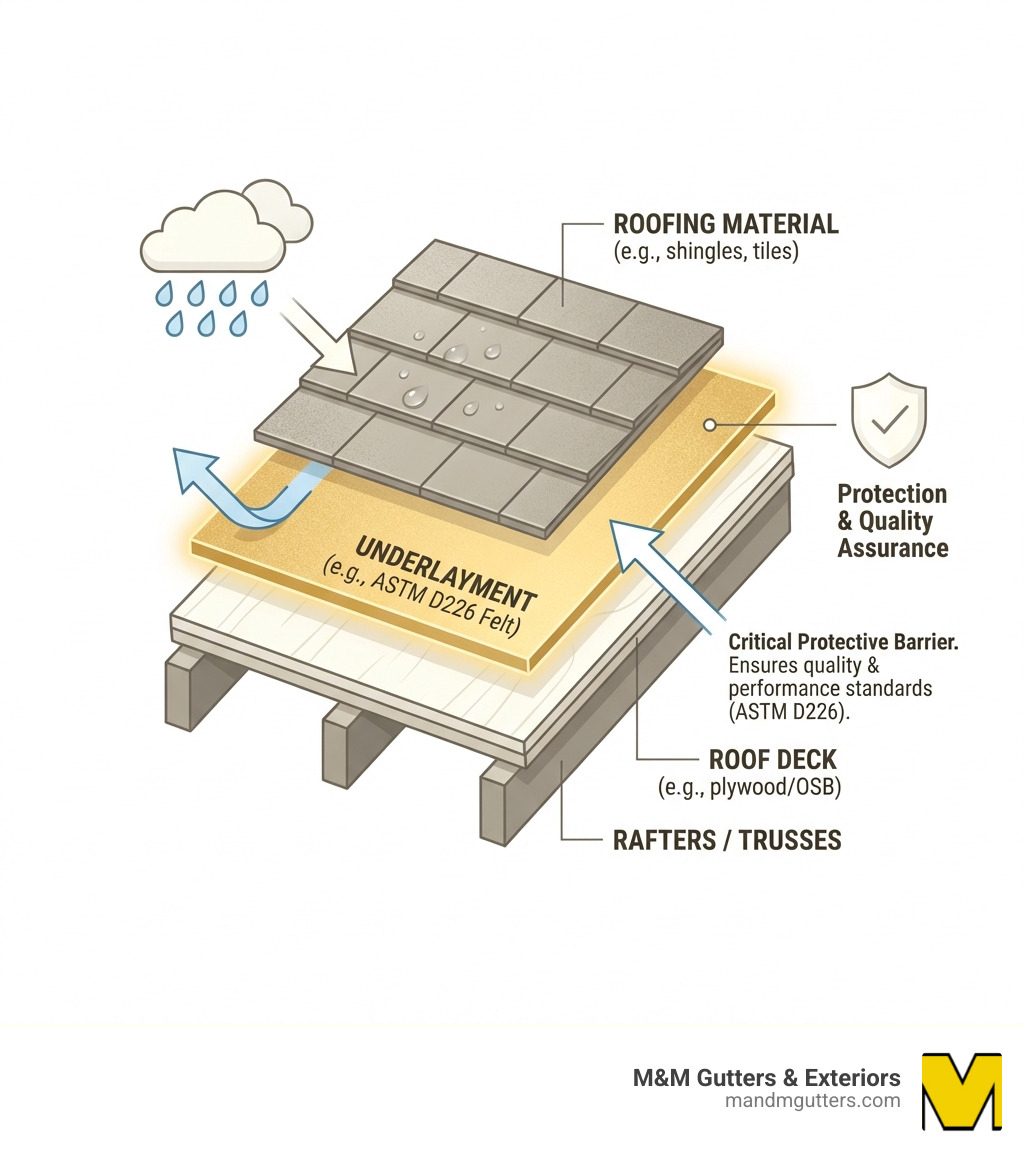
At its core, ASTM D226 is a standard specification developed by ASTM International, a global organization that creates and publishes voluntary consensus technical standards for a wide range of materials, products, systems, and services. For roofing, its primary purpose is to define the requirements for asphalt-saturated organic felt, ensuring that these materials perform reliably as underlayment in roofing and waterproofing systems.
Imagine a world without standards—every manufacturer would produce roofing felt differently, leading to unpredictable quality and performance. ASTM D226 eliminates this uncertainty by providing a common benchmark. It specifies the physical properties and performance characteristics that the felt must meet, ensuring quality assurance across the industry. This means that when we install an ASTM D226 compliant felt on your roof in Salt Lake City, we know it meets rigorous requirements for durability and protection.
This standard covers asphalt-saturated organic felts, which can come with or without perforations. These felts are primarily intended for two critical applications:
- Built-Up Roofs (BUR): Here, the felt is used with asphalts that conform to ASTM Specification D312/D312M. BUR systems are known for their multi-layered protection, and the felt forms a crucial part of this robust assembly.
- Waterproofing Systems: For waterproofing applications, the felt is used with asphalts that conform to ASTM Specification D449/D449M. This ensures a tight, water-resistant barrier, vital for protecting foundations and other vulnerable building elements.
Beyond just physical barriers, ASTM D226 felt plays a role in the breathability of your roof. Products like TRI-BUILT® #15 & #30 ASTM D226 Organic Felt are specifically designed to allow air vapor to transmit through, while simultaneously preventing water from entering. This creates a “breathable membrane” effect. Why is this important, especially in Utah’s varied climate? It helps prevent moisture buildup within the roof structure, which can lead to wood rot, mold, and premature aging of your roofing materials. By allowing trapped moisture to escape, it contributes to the overall health and longevity of your roof system, protecting your investment for years to come.
While our article focuses on ASTM D226, it’s worth noting that ASTM International develops a vast array of standards for material testing across various industries. For instance, other ASTM standards mentioned in the broader context of material testing include:
- ASTM D2974: For determining the water content by mass of soil, rock, and similar materials.
- ASTM D4643, D4944, D4959: These offer less time-consuming alternatives for determining water content in materials.
- ASTM D2726: Used for determining the bulk specific gravity and density of non-absorptive compacted bituminous mixtures.
- ASTM D2166: Specifies the test method for the unconfined compressive strength of cohesive soil.
These examples illustrate the comprehensive nature of ASTM standards, ensuring material quality and performance from the ground up, even if they aren’t directly testing ASTM D226 felt.
The Manufacturing Process
The creation of ASTM D226 compliant felt starts with an organic felt base. This base is typically made from a single thickness of dry felt, often incorporating recycled fibers. For example, some #15 ASTM D226 Felt Underlayment products boast being made of 100% recycled fiber sourced from old corrugated cardboard. This commitment to recycling is a positive step towards sustainable building practices.
Once the organic felt base is formed, the magic happens through the asphalt saturation process. The dry felt is thoroughly saturated with an asphaltic saturant. This process imbues the felt with its water-resistant properties and gives it the flexibility and durability required for roofing applications. This saturation is what transforms a simple felt into a robust underlayment capable of performing its essential role.
As mentioned earlier, some modern ASTM D226 felts are engineered to be breathable membranes. This means that while they effectively keep liquid water out, they allow water vapor to pass through. This crucial feature helps to prevent moisture from becoming trapped within the roof assembly, which is vital for preventing issues like wood rot and extending the lifespan of your roof.
Compliance and Approvals
For materials used in construction, especially those protecting your home, compliance with standards and official approvals are non-negotiable. ASTM D226 felt is no exception. Beyond merely meeting the ASTM standard, many products undergo further scrutiny and receive additional certifications from reputable organizations.
For example, you’ll often see ASTM D226 felt products mentioning approvals from entities like Underwriters Laboratories (UL). UL is an independent safety science company that tests and certifies products, ensuring they meet specific safety and performance criteria, particularly concerning fire resistance.
In regions with stringent building codes, such as Florida, products might also carry specific regional approvals. G.A.P. ASTM 30 D226 Type 2, for instance, is a Florida Building Code Approved product (FL # 2894.5) and Miami Dade Approved. While we’re in Utah, this highlights the level of scrutiny and regional compliance that high-quality roofing materials can achieve, reinforcing their reliability. These rigorous checks ensure that the roofing materials and types we use on your home are dependable and safe, no matter where you are.
The Two Types of ASTM D226 Felt: #15 vs. #30
When we talk about ASTM D226 felt, we’re usually referring to one of two main types, distinguished primarily by their weight and thickness. These are commonly known as #15 felt and #30 felt. Understanding the differences between these two is key to selecting the right underlayment for your specific roofing project.
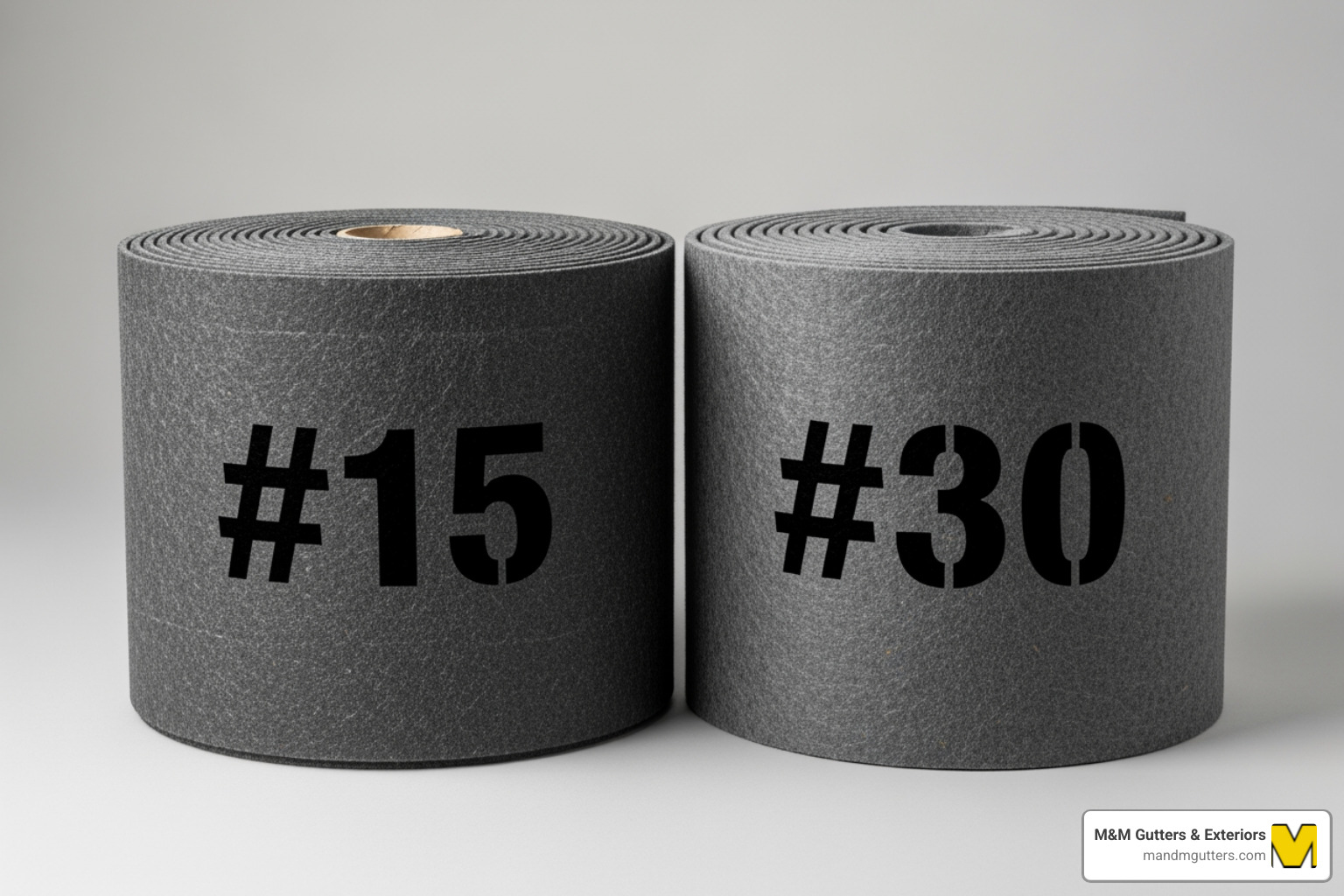
- Type I is commonly called No. 15 asphalt felt.
- Type II is commonly called No. 30 asphalt felt.
The “No. 15” and “No. 30” historically referred to the weight per 100 square feet of the felt, though actual weights can vary slightly today while still meeting the standard. The primary differences lie in their material composition, coverage, weight, and ultimately, their performance and ideal applications.
Let’s break down their key specifications:
| Feature | ASTM D226 Type I (#15 Felt) | ASTM D226 Type II (#30 Felt) |
|---|---|---|
| Common Name | No. 15 Asphalt Felt | No. 30 Asphalt Felt |
| Approx. Weight | Lighter (historically 15 lbs/100 sq ft) | Heavier (historically 30 lbs/100 sq ft) |
| Coverage | 432 sq. ft. per roll (e.g., 36″ x 144′) | 216 sq. ft. per roll (e.g., 36″ x 72′) |
| Saturated Mass | Min. 11.5 lb/100 sf | Min. 26.0 lb/100 sf |
| Breaking Strength | Min. 30/15 lbf/in (Machine Direction/Cross Direction) | Min. 40/20 lbf/in (Machine Direction/Cross Direction) |
| Composition | Organic felt, asphalt saturated, often recycled fibers | Organic felt, asphalt saturated, often recycled fibers |
| Best Use | Light to moderate duty, residential, temporary protection | Heavy duty, commercial, high-wind areas, longer exposure |
Key Characteristics of ASTM D226 Type I (#15 Felt)
The ASTM D226 Type I, or No. 15 asphalt felt, is your go-to for standard residential roofing projects. It’s the lighter of the two options, making it easier to handle and install.
One of its significant advantages is its coverage. A single roll of #15 felt typically covers about 432 square feet. This means fewer rolls to buy and fewer seams to deal with during installation, which can be a plus for smaller or simpler roofs. Its minimum saturated mass is 11.5 pounds per 100 square feet, and it boasts a breaking strength of at least 30/15 lbf/in (machine direction/cross direction). This provides adequate protection for many applications.
We often recommend #15 felt as an excellent underlayment for steep-slope roofing systems like asphalt shingles, wood shakes, and tiles. It provides that essential secondary layer of protection against moisture, contributing to the longevity of your roof system, whether you’re considering metal roof vs shingles for your Salt Lake City home. It’s a reliable choice for typical homes in Utah, offering good value and performance.
Key Characteristics of ASTM D226 Type II (#30 Felt)
When you need something more robust, ASTM D226 Type II, or No. 30 asphalt felt, steps up to the plate. This is the heavier, more durable option, designed for applications demanding extra protection and strength.
While a roll of #30 felt covers less area—typically 216 square feet—its increased weight and thickness translate directly into improved performance. With a minimum saturated mass of 26.0 pounds per 100 square feet and a breaking strength of at least 40/20 lbf/in, it offers superior tear resistance and puncture protection during installation and throughout its lifespan. This increased tensile strength makes it particularly well-suited for high-wind areas or roofs that might experience more foot traffic during construction.
For commercial applications or residential roofs that require heavy-duty underlayment, #30 felt is often the preferred choice. Its added robustness offers a greater margin of safety against the elements. If you’re wondering about the lifespan of a flat roof in Utah, incorporating a durable underlayment like #30 felt can contribute significantly to its overall resilience and longevity. It provides a more substantial barrier, capable of withstanding harsher conditions and providing extended protection.
Applications and Best Practices for Installation
ASTM D226 felt is a versatile material, primarily used as a secondary weather barrier in roofing systems. Its role is critical: to protect your home from wind-driven rain and other environmental elements that might penetrate the primary roofing material. This makes it an excellent choice as an underlayment for steep-slope roofing types such as shingles, wood shakes, and tiles, which are common across Salt Lake City and Northern Utah.
But its utility isn’t limited to just under shingles. This robust felt can also be installed under various other building materials, providing an extra layer of moisture protection for applications like siding (stucco, aluminum, vinyl, wood) and even some flooring systems. This versatility underscores why it’s such a staple in our exterior remodeling projects.
Roof Deck Preparation and Ventilation
Proper installation begins long before the felt rolls out. The roof deck must be carefully prepared to ensure the underlayment performs optimally and lasts for years. This means:
- Clean and Dry Deck: The surface must be free of debris, dirt, and moisture.
- Repairing Damaged Sheathing: Any decayed, rotting, rusted, or broken materials on the roof deck must be removed and replaced. We can’t build a strong roof on a weak foundation!
- Securing Loose Nails: All loose nails should be removed and the deck should be secured to the framing with correct fasteners.
- OSB Sheathing Considerations: If new OSB sheathing is being used, it’s crucial to leave appropriate expansion gaps (e.g., 1/8″ at end joints, 3/16″ at side joints, always verifying with the manufacturer). Pre-conditioning new OSB can also help minimize expansion and contraction issues down the line.
Beyond the deck itself, adequate ventilation under the roof deck is absolutely paramount, especially when considering how to prevent roof damage during Utah winters. Proper attic ventilation (ridge vents, soffit vents, etc.) prevents humidity buildup. Without it, excessive moisture can lead to:
- Wrinkling and ridging of the underlayment.
- Buckling of the primary roofing materials.
- Wood rot in the roof deck and structural components.
- Premature aging of your entire roofing system.
In Utah’s climate, where we experience both cold winters and hot summers, managing moisture and heat is critical. Good ventilation ensures that your roof can “breathe,” promoting a healthy, long-lasting system.
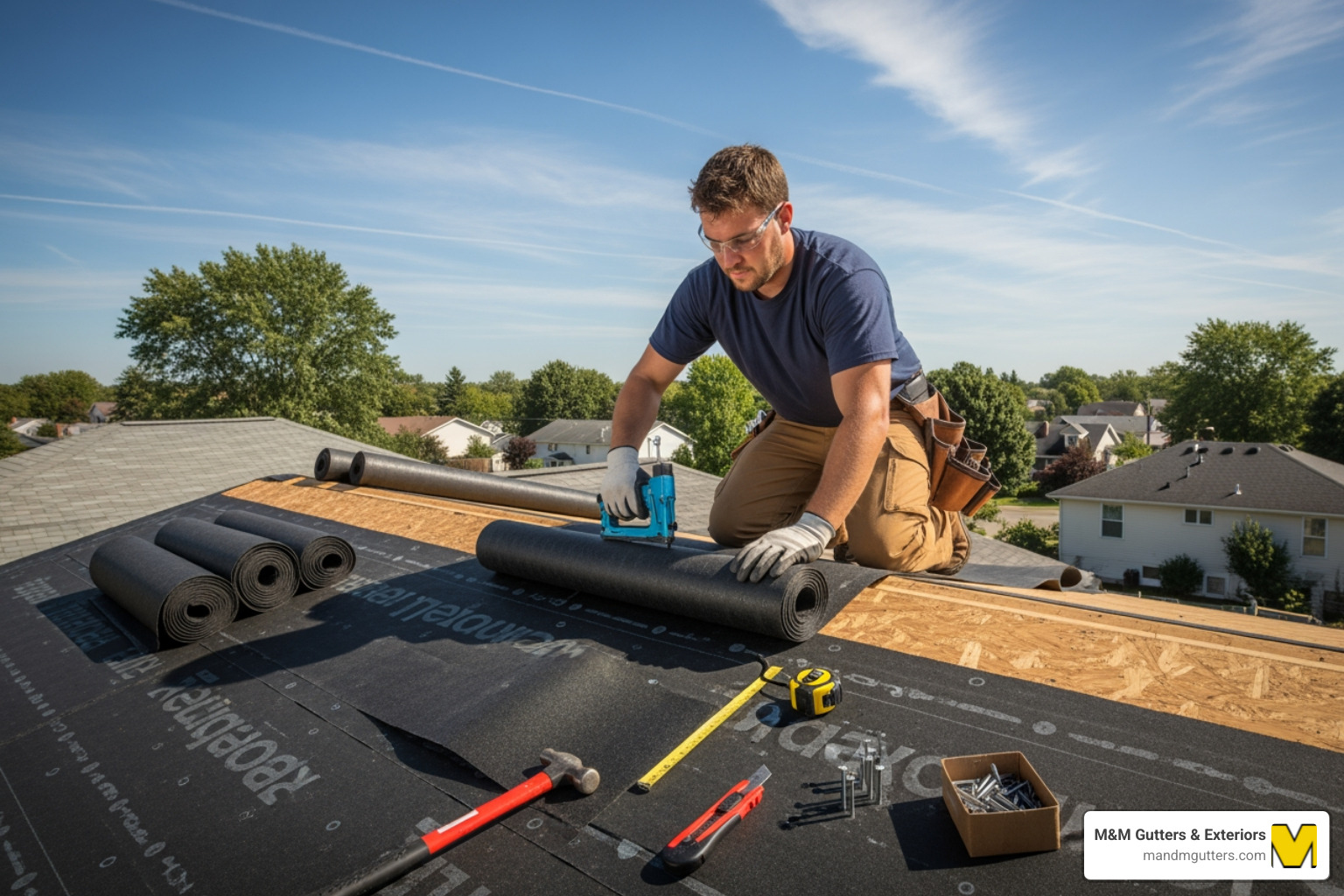
Application and Fastening your ASTM D226 Felt
Once the deck is prepped, the careful application of ASTM D226 felt begins. Here’s how we ensure a professional, secure installation:
- Horizontal Installation: The felt is run horizontally across the roof, starting from the bottom edge (the eaves). This allows gravity to help shed water over the overlaps, preventing moisture intrusion.
- Eave to Ridge: Each course of felt is laid, working your way up the roof towards the ridge. The felt should align so its edge covers up to the rake and eaves but doesn’t extend over the sides.
- Initial Securing: To hold it in place while unrolling, we’ll typically install about 5 nails in a 2-inch square pattern in the top right corner of the felt.
- Unrolling and Alignment: The felt is unrolled approximately halfway across the roof (20-25 feet). We pull it until it’s tight and smooth, eliminating any wrinkles. Once aligned straight and flat, a nail is hammered in the top corner.
- Nailing Pattern: We then install nails every 6-8 inches across the top, center, and bottom of the felt to secure it thoroughly. This robust fastening prevents the felt from shifting or tearing.
- Overlap Requirements: Subsequent layers of felt require a 2-inch overlap with the course below. We use the guidelines printed on the felt itself for precise alignment. At the ridge, the last layer should overlap by approximately 8 inches and be securely nailed.
- Wrinkle Prevention: Sometimes, wrinkles can still appear. If they do, they are slit with a utility knife, nailed flat, and then sealed with flashing cement. This meticulous attention to detail is crucial for preventing potential leak points. How to find a roof leak can be a frustrating experience, and proper underlayment installation is key to avoiding it.
Specific Requirements for Roofing Nails: The choice and application of fasteners are critical. We follow recommendations from organizations like the National Roofing Contractors Association (NRCA). For ASTM D226 felt, this means using:
- Type: 11-gauge or 12-gauge galvanized steel roofing nails.
- Head: Low-profile, smooth, flat heads.
- Shank: Barbed or deformed shanks for superior holding power.
- Length: Nails must be long enough to penetrate through all layers of felt and the roof deck, or at least 1 inch into wood decks. This ensures a secure attachment that won’t pull out under wind stress.
Safety is always our priority. Before handling any product, we read all product safety data sheets and container labels to ensure the well-being of our team and your property.
Frequently Asked Questions about ASTM D226 Felt
We often get questions from homeowners about the specifics of roofing felt. Here are some of the most common ones regarding ASTM D226 felt:
Is ASTM D226 felt waterproof or water-resistant?
This is a great question! ASTM D226 felt is primarily water-resistant, not fully waterproof. Think of it as a highly effective secondary barrier. Its asphalt saturation allows it to shed water efficiently, preventing moisture from penetrating the roof deck if the primary roofing material (like shingles) is compromised or during heavy rain and wind.
However, it’s not designed to be a standalone, permanent waterproofing layer. It relies on the primary roofing material for the main protection. If exposed to the elements for extended periods, or if submerged in water, it will eventually allow moisture to pass. Its role is to provide a critical backup defense, giving your roof system an extra layer of resilience.
Can I use #15 felt for all roofing applications?
While #15 ASTM D226 felt is suitable for many standard residential roofing applications, it’s not a one-size-fits-all solution. For typical steep-slope roofs with asphalt shingles in areas with moderate weather, #15 felt often provides adequate protection.
However, there are situations where #30 ASTM D226 felt is the better, or even required, choice:
- Local Building Codes: Some local building codes, especially in high-wind zones or areas prone to severe weather, may mandate the use of #30 felt due to its superior tear strength and weight. Always check with your local Salt Lake City building department!
- Roof Slope Considerations: While both can be used on steep slopes, roofs with lower pitches might benefit from the added protection of #30 felt.
- Heavy-Duty Applications: For commercial buildings, roofs that might experience more foot traffic during maintenance, or under heavier primary roofing materials like certain tiles, the increased durability of #30 felt is often preferred.
- Extended Exposure: If there’s a chance the underlayment might be exposed to weather for a longer period during construction, #30 felt offers greater resilience.
We carefully assess your specific roof, local conditions, and building codes to recommend the appropriate type of ASTM D226 felt for your project.
How long can roofing felt be exposed to the sun and weather?
ASTM D226 felt is designed for temporary exposure to the elements during the roofing process, not long-term. While its asphalt saturation provides water resistance, prolonged exposure to ultraviolet (UV) rays from the sun will cause it to degrade.
Manufacturers typically specify a maximum exposure time, which can range from a few days to a couple of weeks, depending on the product and local conditions. After this period, the felt can become brittle, lose its protective qualities, and even tear easily.
It’s crucial that the primary roofing material (shingles, tiles, etc.) is installed over the felt as soon as possible after the felt is laid. This protects the underlayment from UV degradation and ensures its long-term performance as a secondary barrier. If your roofing project faces delays, we take steps to protect any exposed felt, or we’ll replace it if it’s been exposed beyond its recommended limits to ensure the integrity of your roof system.
Conclusion: Trust the Experts for Your Utah Roofing Needs
Understanding standards like ASTM D226 might seem technical, but it’s fundamentally about ensuring the quality and longevity of your roof. This foundational underlayment plays an invisible yet vital role in protecting your home from the harsh realities of weather, from heavy rains to strong winds, a common occurrence in our beautiful Utah landscape.
Choosing ASTM D226 compliant materials means you’re investing in a product that has met rigorous industry standards for performance and durability. However, even the highest quality materials are only as good as their installation. Proper preparation of the roof deck, meticulous application techniques, and correct fastening are all critical steps that ensure your underlayment can effectively do its job as a secondary weather barrier. This attention to detail is what helps prevent common causes of roof leaks in Salt Lake City and extends the life of your entire roofing system.
For professional roofing installation and exterior remodeling in the Salt Lake City area, Salt Lake County, Utah County, Summit County, Tooele County, Davis County, Weber County, and throughout Northern Utah, trust the 30+ years of experience at M&M Gutters & Exteriors. We’re committed to using high-quality materials and applying expert craftsmanship to every project, ensuring your home is protected for years to come.
Ready to secure your home with a reliable roof? Contact us for your roofing needs today!